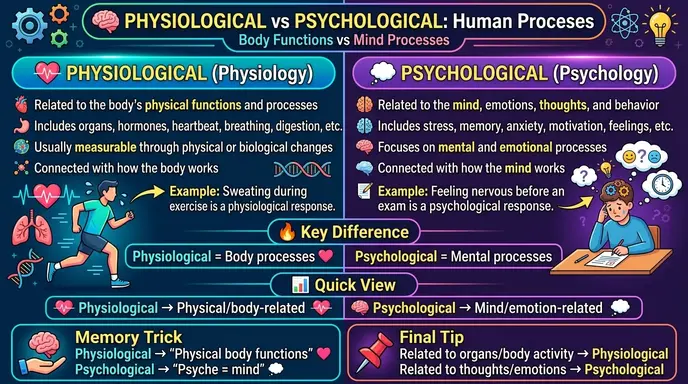
The difference between physiological and psychological is that physiological relates to the body’s physical functions and biological processes, while psychological relates to the mind, emotions, thoughts, and mental behavior.
Many students, patients, and learners search for the difference between physiological and psychological because both terms are connected to human health and behavior, yet they focus on completely different systems of the human body and mind.
In simple words, physiological refers to how the body works physically, while psychological refers to how the mind works mentally and emotionally. Understanding the difference between physiological and psychological helps people better understand medicine, mental health, fitness, education, stress, and human behavior.
💡 Quick Answer: Difference Between Physiological or Psychological
Physiological relates to physical body functions, while psychological relates to mental and emotional processes.
👉 Example:
An increased heart rate during exercise is physiological, while anxiety before an exam is psychological.
📘 Definition of Physiological and Psychological
- Physiological: Related to the body’s biological functions, organs, systems, and physical processes.
- Psychological: Related to the mind, emotions, thinking patterns, behavior, and mental processes.
🗣️ Pronunciation (US & UK)
- Physiological
- US: /ˌfɪz.i.əˈlɑː.dʒɪ.kəl/
- UK: /ˌfɪz.i.əˈlɒdʒ.ɪ.kəl/
- Psychological
- US: /ˌsaɪ.kəˈlɑː.dʒɪ.kəl/
- UK: /ˌsaɪ.kəˈlɒdʒ.ɪ.kəl/
These terms are commonly used in medicine, psychology, education, fitness, neuroscience, and healthcare discussions.
📊 Comparison Table: Physiological vs Psychological
| Feature | Physiological | Psychological | Similarity |
| Main Focus | Body functions and biology | Mind and mental processes | Both relate to human health |
| Related System | Physical body systems | Brain, emotions, and behavior | Both affect overall wellbeing |
| Common Examples | Heart rate, digestion, breathing | Stress, anxiety, memory | Both influence daily life |
| Medical Area | Physiology and medicine | Psychology and mental health | Both studied scientifically |
| Measurement Style | Physical tests and body signs | Behavioral and emotional evaluation | Both use professional assessment |
| Exercise Impact | Muscle activity and oxygen use | Motivation and confidence | Both interact with each other |
| Stress Response | Hormone release and heartbeat | Emotional pressure and fear | Both involved during stress |
| Treatment Focus | Physical care and medicine | Therapy and mental support | Both support health improvement |
This table clearly shows the difference and similarity between physiological and psychological for quick understanding.
🧠 Key Differences Explained Between Psychological and Physiological
❤️ Body vs Mind
The biggest difference between physiological and psychological is focus. Physiological concerns the body, while psychological concerns the mind and emotions.
👉 Example:
Sweating during exercise is physiological, while fear of public speaking is psychological.
🩺 Physical Processes
Physiological functions include:
- Blood circulation
- Breathing
- Digestion
- Hormone release
- Muscle movement
🧠 Mental Processes
Psychological functions include:
- Emotions
- Thoughts
- Memory
- Motivation
- Personality
👉 Example:
Depression and anxiety are psychological conditions.
😰 Stress Response
Stress can create both physiological and psychological reactions.
🏃 Exercise and Fitness
Exercise affects both body systems and mental wellbeing.
🧬 Scientific Fields
Physiology studies body functions, while psychology studies behavior and mental processes.
⚡ Interaction Between Mind and Body
Psychological stress can trigger physiological changes like increased heart rate.
🧠 Why Physiological and Psychological Get Confused
The difference between physiological and psychological becomes confusing because the mind and body constantly interact with each other. Mental stress can affect the body physically, while physical illness can affect emotions and mood.
🌐 How Medical and Health Systems Use Physiological and Psychological Concepts
Healthcare systems separate:
- Physiological factors → physical health and body systems
- Psychological factors → mental health and behavior
Organizations like World Health Organization and healthcare platforms study how both areas affect:
- Human performance
- Recovery
- Stress management
- Chronic illness
- Overall wellbeing
Fitness apps and wellness systems also track physiological data such as heart rate while supporting psychological motivation and habit building.
📊 Difference + Similarity Table
| Feature | Physiological | Psychological | Similarity |
| Meaning | Related to body functions | Related to mental processes | Both affect health |
| Main Area | Physical systems | Emotions and thoughts | Both connected to human wellbeing |
| Examples | Heartbeat and breathing | Anxiety and memory | Both influence behavior |
| Scientific Study | Physiology | Psychology | Both are academic fields |
| Stress Effects | Hormones and pulse changes | Fear and emotional pressure | Both respond to stress |
| Health Focus | Physical condition | Mental condition | Both impact quality of life |
| Common Evaluation | Medical testing | Behavioral assessment | Both use professional analysis |
| Daily Impact | Energy and body performance | Mood and decision-making | Both shape everyday experiences |
This table clearly shows the difference and similarity between physiological and psychological for quick understanding.
🩺 Deep Explanation: How Mind and Body Work Together
Even though physiological and psychological processes are different, they constantly influence each other:
- Psychological stress can raise blood pressure
- Poor sleep affects both body and mood
- Exercise improves physical and mental wellbeing
- Chronic illness may affect emotional health
👉 Example:
A student nervous before an exam may experience:
- Psychological anxiety
- Physiological sweating and faster heartbeat
This connection is why modern healthcare often considers both mental and physical wellbeing together.
⚠️ Common Mistakes with Difference Between Physiological and Psychological
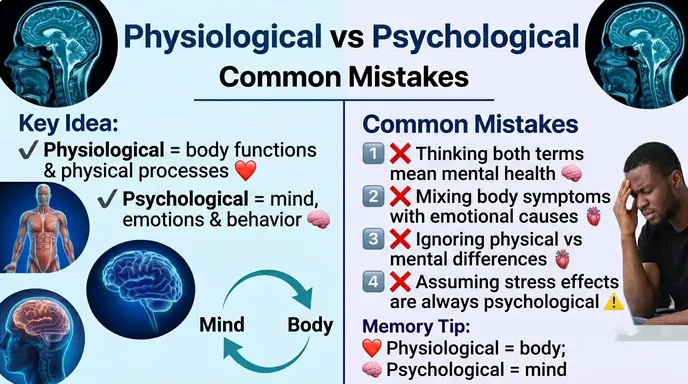
Thinking Physiological and Psychological Mean the Same Thing
❌ Physiological and psychological both only refer to mental health.
✅ Physiological relates to the body, while psychological relates to the mind.
Ignoring Mind-Body Connection
❌ Mental stress never affects the body physically.
✅ Psychological stress can create physiological reactions.
Using Terms Incorrectly
❌ Increased heart rate is a psychological response.
✅ Increased heart rate is physiological.
Confusing Emotions with Physical Functions
❌ Digestion and breathing are psychological processes.
✅ They are physiological body functions.
Assuming Mental Health Is Not Scientific
❌ Psychological processes are not studied scientifically.
✅ Psychology is a major scientific and medical field.
Believing Physical Health Never Affects Emotions
❌ Physical illness cannot affect mental wellbeing.
✅ Physiological conditions can influence mood and emotions.
🧑⚕️ Real Life Examples with Physiological and Psychological
- Heart rate increasing during exercise
- Anxiety before public speaking
- Muscle fatigue after sports
- Emotional stress during exams
- Hormone changes affecting the body
- Therapy helping emotional wellbeing
🎯 When Physiological or Psychological Factors Matter
- Medical diagnosis → physiological factors important
- Emotional wellbeing → psychological factors important
- Athletic performance → both matter
- Stress management → both interact
- Sleep quality → physiological and psychological effects
- Workplace productivity → both influence performance
🤔 Why People Get Confused in Physiological and Psychological
- Similar word structure
- Mind and body work together
- Stress affects both systems
- Health discussions often combine both topics
- Scientific terminology can sound similar
🧠 How Healthcare Systems Understand Physiological and Psychological Factors
Healthcare systems analyze:
- Body functions
- Mental health patterns
- Stress responses
- Emotional wellbeing
- Physical performance
This helps professionals create more complete approaches to health and wellness.
🧠 Expert Insight
The difference between physiological and psychological mainly comes from body versus mind. Physiological processes involve physical body systems and biological functions, while psychological processes involve emotions, thoughts, and mental behavior.
In practical healthcare and daily life, both areas are deeply connected. Modern medicine increasingly recognizes that physical and mental wellbeing influence each other continuously.
❓ FAQ: Difference Between Physiological and Psychological
1. What is the main difference between physiological and psychological?
Physiological relates to body functions, while psychological relates to mental and emotional processes.
2. Is stress physiological or psychological?
Stress can involve both physiological and psychological responses.
3. Is heart rate physiological?
Yes, heart rate is a physiological body function.
4. Is anxiety psychological?
Yes, anxiety is mainly considered psychological.
5. Can psychological issues affect the body?
Yes, mental stress can create physical body reactions.
6. Are physiology and psychology scientific fields?
Yes, both are major scientific disciplines.
7. Why do people confuse these terms?
Because mental and physical health often interact closely.
🧾 Conclusion
The difference between physiological and psychological comes from physical body functions versus mental and emotional processes. Physiological relates to biological systems such as breathing, heartbeat, and digestion, while psychological relates to emotions, behavior, thoughts, and mental wellbeing.
Understanding the difference between physiological and psychological helps people better understand health, stress, fitness, education, and human behavior. Once you connect physiological with the body and psychological with the mind, the distinction becomes much easier to recognize in everyday life and healthcare discussions.
Discover More Articles:

I’m Owen Parker, and I write articles that focus on explaining the differences between common concepts, tools, and ideas. I enjoy simplifying complex information and turning it into clear comparisons that anyone can understand. My work often covers science , education, technology, and everyday knowledge topics.