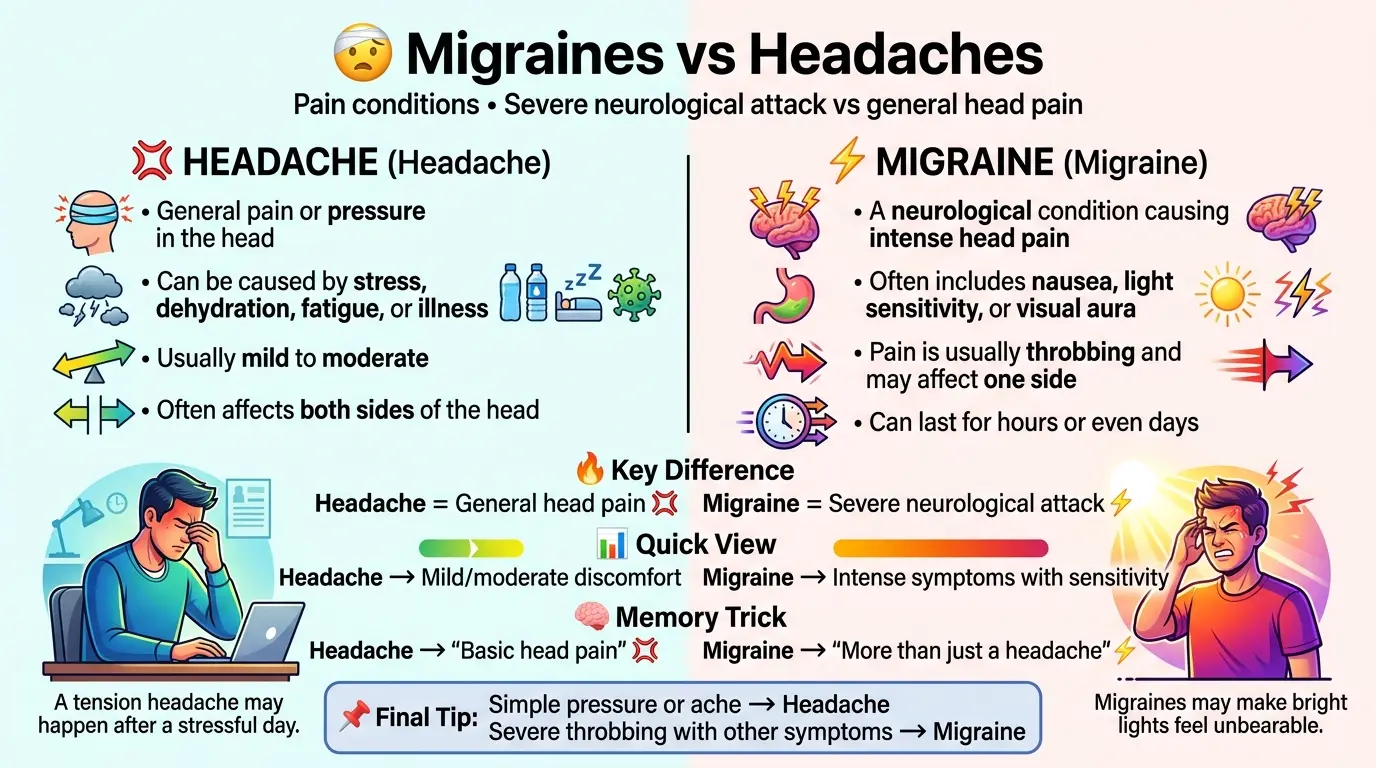
The difference between migraines and headaches is that a headache is a general term for pain in the head, while a migraine is a neurological condition that often causes intense head pain along with symptoms like nausea, light sensitivity, and visual disturbances.
Many people search for the difference between migraines and headaches because both involve head pain, yet migraines are usually more complex, severe, and disruptive than ordinary headaches.
In simple words, every migraine includes a type of headache, but not every headache is a migraine. Understanding the difference between migraines and headaches helps people recognize symptoms more clearly and better understand when medical attention may be needed.
💡 Quick Answer: Difference Between Migraines or Headaches
Headaches refer to general head pain, while migraines are a neurological condition that usually causes stronger pain and additional symptoms like nausea or sensitivity to light.
👉 Example:
A mild stress headache may disappear after rest, while a migraine can last for hours or even days and make normal activities difficult.
📘 Definition of Migraines and Headaches
- Migraine: A neurological condition that commonly causes severe throbbing head pain along with symptoms such as nausea, vomiting, or light sensitivity.
- Headache: General pain or discomfort in the head, scalp, or neck caused by various conditions or triggers.
🗣️ Pronunciation (US & UK)
- Migraine
- US: /ˈmaɪ.ɡreɪn/
- UK: /ˈmiː.ɡreɪn/
- Headache
- US: /ˈhed.eɪk/
- UK: /ˈhed.eɪk/
These terms are commonly discussed in neurology, healthcare, stress management, wellness discussions, and pain treatment.
📊 Comparison Table: Migraines vs Headaches
| Feature | Migraine | Headache | Similarity |
| Main Meaning | Neurological condition with severe symptoms | General head pain | Both involve head discomfort |
| Pain Intensity | Often moderate to severe | Mild to severe | Both may affect daily life |
| Additional Symptoms | Nausea, aura, light sensitivity | Usually fewer symptoms | Both may require rest |
| Pain Type | Often throbbing or pulsing | Pressure or aching common | Both can affect concentration |
| Duration | Hours to days | Minutes to hours | Both vary by person |
| Common Triggers | Hormones, stress, sleep changes | Stress, dehydration, fatigue | Both may have triggers |
| Physical Activity Effect | Activity may worsen symptoms | Often less affected | Both involve head pain |
| Medical Complexity | Neurological disorder | Symptom category | Both may need treatment |
This table clearly shows the difference and similarity between migraines and headaches for quick understanding.
🧠 Key Differences Explained Between Headaches and Migraines
🧠 Neurological Condition vs General Symptom
The biggest difference between migraines and headaches is that migraines are considered a neurological disorder, while headaches are a broad symptom category.
👉 Example:
A person may experience headaches from dehydration, but migraines often involve multiple neurological symptoms.
💥 Pain Severity
Migraines usually cause stronger and more disabling pain than common headaches.
🌟 Additional Symptoms
Migraines may include:
- Nausea
- Vomiting
- Sensitivity to light
- Sensitivity to sound
- Visual aura
👉 Example:
Bright lights may become unbearable during a migraine attack.
⏳ Duration
Migraines often last longer than common headaches.
🏃 Effect of Movement
Physical activity may worsen migraine symptoms significantly.
😴 Recovery Experience
Many migraine sufferers feel exhausted even after pain improves.
⚡ Aura Symptoms
Some migraines involve temporary visual or sensory disturbances before pain begins.
🧠 Why Migraines and Headaches Get Confused
The difference between migraines and headaches becomes confusing because migraines include head pain, causing many people to think migraines are simply “bad headaches.”
However, migraines involve additional neurological processes that make them more complex than ordinary headaches.
🌐 How Medical Systems Understand Migraines and Headaches
Healthcare systems classify:
- Headaches as general pain symptoms
- Migraines as neurological disorders
Organizations like World Health Organization and American Migraine Foundation study:
- Pain patterns
- Neurological symptoms
- Triggers
- Treatment approaches
- Quality of life impact
Medical apps and symptom trackers also help patients monitor headache and migraine patterns.
📊 Difference + Similarity Table
| Feature | Migraine | Headache | Similarity |
| Meaning | Neurological pain condition | General head pain symptom | Both affect the head |
| Pain Style | Pulsing or throbbing | Pressure or aching | Both may cause discomfort |
| Severity Level | Often severe | Mild to severe | Both impact concentration |
| Additional Symptoms | Nausea and sensitivity common | Usually fewer symptoms | Both may require treatment |
| Duration Range | Often long lasting | Often shorter | Both vary individually |
| Trigger Types | Hormones, stress, sensory triggers | Stress and fatigue common | Both may have triggers |
| Activity Impact | Movement may worsen symptoms | Usually less movement sensitivity | Both affect daily routines |
| Medical Classification | Neurological disorder | Symptom category | Both involve pain management |
This table clearly shows the difference and similarity between migraines and headaches for quick understanding.
🩺 Deep Explanation: Why Migraines Feel More Intense
Migraines involve more than simple pain:
- Neurological changes affect the brain
- Sensory sensitivity increases
- Blood vessel and nerve activity may change
- Symptoms can affect vision, mood, and concentration
👉 Example:
Some people see flashing lights or experience temporary visual changes before migraine pain begins.
Ordinary headaches, however, often result from:
- Stress
- Fatigue
- Muscle tension
- Dehydration
- Lack of sleep
This is why migraines usually feel more disruptive and exhausting.
⚠️ Common Mistakes with Difference Between Migraines and Headaches
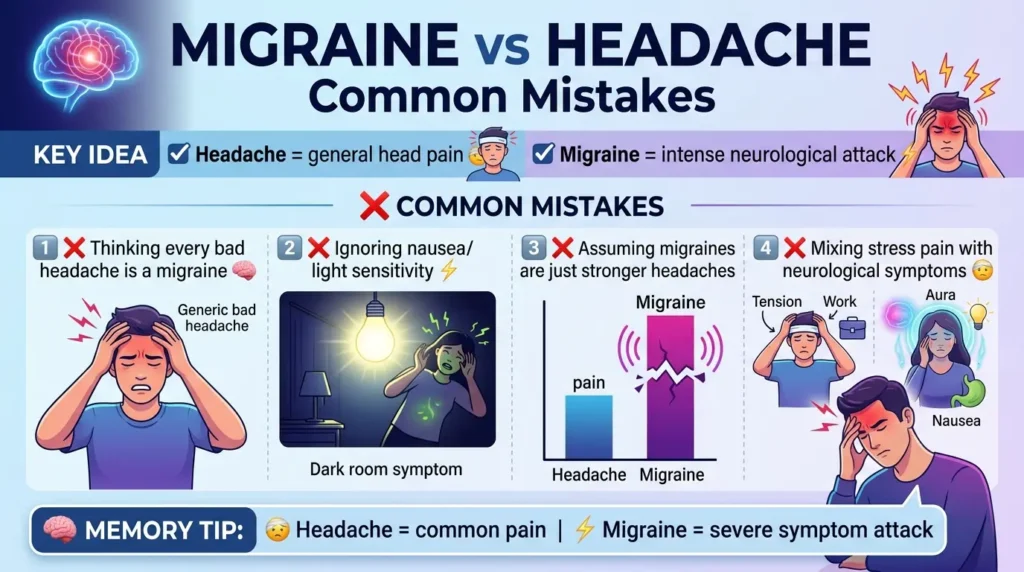
Thinking Every Severe Headache Is a Migraine
❌ All painful headaches are migraines.
✅ Migraines involve additional neurological symptoms.
Ignoring Light Sensitivity
❌ Sensitivity to light has nothing to do with migraines.
✅ Light sensitivity is a common migraine symptom.
Using Terms Incorrectly
❌ Migraine and headache always mean the same thing.
✅ Migraines are a specific neurological condition.
Assuming Migraines Only Cause Head Pain
❌ Migraines only affect the head.
✅ Migraines may affect vision, nausea, and energy levels.
Ignoring Trigger Patterns
❌ Triggers do not matter in migraines.
✅ Stress, hormones, sleep, and foods may contribute.
Believing Rest Always Solves Migraines
❌ Every migraine disappears quickly after sleep.
✅ Migraines can last hours or days.
🧑⚕️ Real Life Examples with Migraines and Headaches
- Stress headaches after long workdays
- Migraines triggered by bright lights
- Tension headaches caused by muscle strain
- Migraine attacks causing nausea
- Dehydration headaches during hot weather
- Visual aura before migraine pain begins
🎯 When Migraines or Headaches Commonly Occur
- Stress and tension → headaches commonly occur
- Hormonal changes → migraines may occur
- Dehydration → headaches common
- Sensory overload → migraines possible
- Lack of sleep → both may occur
- Long screen time → headaches or migraines may develop
🤔 Why People Get Confused in Migraines and Headaches
- Both involve head pain
- Migraine symptoms vary between people
- Mild migraines may resemble headaches
- Medical terminology overlaps
- People casually use the word “migraine” incorrectly
🧠 How Healthcare Systems Understand Migraines and Headaches
Healthcare systems analyze:
- Pain intensity
- Symptom patterns
- Neurological effects
- Trigger history
- Duration and frequency
This helps doctors determine appropriate evaluation and treatment approaches.
🧠 Expert Insight
The difference between migraines and headaches mainly comes from neurological involvement, symptom complexity, and severity. Headaches are general pain symptoms, while migraines are neurological conditions that often include additional sensory and physical effects beyond simple head pain.
In practical healthcare situations, recognizing migraine specific symptoms can help patients better describe their experiences and seek appropriate medical guidance when needed.
❓ FAQ: Difference Between Headaches or Migraines
1. What is the main difference between migraines and headaches?
Headaches are general head pain, while migraines are neurological conditions with additional symptoms.
2. Are migraines more painful than headaches?
Migraines are often more severe and disruptive.
3. Can migraines cause nausea?
Yes, nausea is a common migraine symptom.
4. Do headaches always mean migraines?
No, many headaches are not migraines.
5. What is migraine aura?
Aura refers to temporary sensory or visual disturbances before some migraines.
6. Can stress cause both migraines and headaches?
Yes, stress can contribute to both conditions.
7. Why do migraines last longer?
Migraines involve more complex neurological processes than many ordinary headaches.
🧾 Conclusion
The difference between migraines and headaches comes from symptom complexity, neurological involvement, and pain severity. Headaches are general forms of head pain caused by many conditions, while migraines are neurological disorders that often involve severe pain, nausea, sensory sensitivity, and longer lasting symptoms.
Understanding the difference between migraines and headaches helps people recognize symptoms more accurately and better understand how different types of head pain affect the body. Once you connect headaches with general pain and migraines with broader neurological symptoms, the distinction becomes much easier to recognize in real life health situations.
Discover More Articles:

Hi, I’m Nabeel Hassan. I love exploring interesting topics and explaining how different things compare with each other. Through my writing, I aim to provide clear, helpful, and easy to read explanations. I cover subjects related to learning, science, technology and general knowledge.