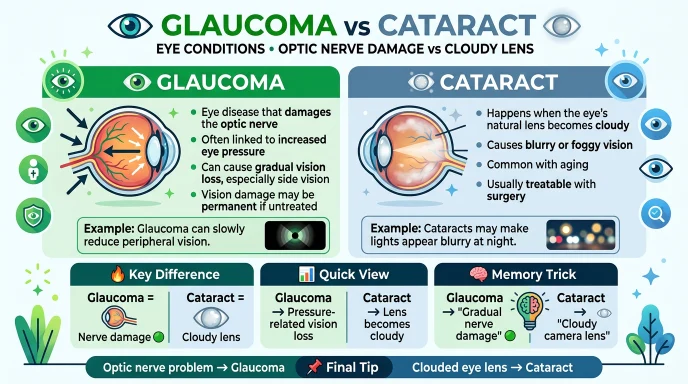
The difference between glaucoma and cataract is that glaucoma is a group of eye conditions that damage the optic nerve, often linked to increased eye pressure, while cataract is the clouding of the eye’s natural lens that causes blurry or dim vision.
Many patients search for the difference between glaucoma and cataract because both conditions affect eyesight and become more common with age, yet they impact the eye in very different ways.
In simple words, glaucoma mainly damages the optic nerve, while cataracts make the eye lens cloudy. Understanding the difference between glaucoma and cataract helps people recognize symptoms, understand vision changes, and learn why regular eye examinations are important.
💡 Quick Answer: Difference Between Glaucoma or Cataract
Glaucoma damages the optic nerve and may lead to permanent vision loss, while cataract causes clouding of the eye lens that can often be treated with surgery.
👉 Example:
A person with cataracts may notice blurry or foggy vision, while someone with glaucoma may slowly lose side vision without early warning signs.
📘 Definition of Glaucoma and Cataract
- Glaucoma: A group of eye diseases that damage the optic nerve, often related to increased pressure inside the eye.
- Cataract: A condition where the eye’s natural lens becomes cloudy, reducing clear vision.
🗣️ Pronunciation (US & UK)
- Glaucoma
- US: /ɡlɔːˈkoʊ.mə/
- UK: /ɡlɔːˈkəʊ.mə/
- Cataract
- US: /ˈkæt̬.ə.rækt/
- UK: /ˈkæt.ər.ækt/
These terms are commonly discussed in ophthalmology, eye care, aging health, vision treatment, and medical screenings.
📊 Comparison Table: Glaucoma vs Cataract
| Feature | Glaucoma | Cataract | Similarity |
| Main Problem | Optic nerve damage | Cloudy eye lens | Both affect vision |
| Eye Area Affected | Optic nerve | Eye lens | Both involve eye health |
| Vision Change | Gradual vision loss | Blurry or foggy vision | Both can worsen over time |
| Pain Presence | Sometimes painless | Usually painless | Both require eye exams |
| Common Cause | Increased eye pressure often involved | Aging lens changes | Both more common with age |
| Treatment Style | Eye drops, laser, surgery | Cataract surgery | Both may require medical care |
| Vision Loss Type | Peripheral vision loss common | General clouded vision | Both may affect daily activities |
| Reversibility | Damage often permanent | Vision often improved surgically | Both need early detection |
This table clearly shows the difference and similarity between glaucoma and cataract for quick understanding.
🧠 Key Differences Explained Between Cataract and Glaucoma
👁️ Main Eye Structure Affected
The biggest difference between glaucoma and cataract is the part of the eye affected. Glaucoma damages the optic nerve, while cataracts affect the eye lens.
👉 Example:
Cataracts make vision appear cloudy, while glaucoma may slowly reduce side vision.
⚡ Vision Loss Pattern
Glaucoma often causes gradual peripheral vision loss, while cataracts cause blurred or foggy overall vision.
🧬 Cause of the Condition
Glaucoma is often linked to increased pressure inside the eye, while cataracts commonly develop from age related lens changes.
🩺 Treatment Approach
Cataracts are commonly treated with lens replacement surgery, while glaucoma treatment focuses on preventing further nerve damage.
👉 Example:
Glaucoma damage cannot usually be reversed once vision loss occurs.
⏳ Symptom Development
Both conditions may develop slowly over time, especially in older adults.
🚨 Risk to Vision
Untreated glaucoma may lead to permanent blindness because of optic nerve damage.
👓 Daily Vision Effects
Cataracts often make:
- Reading harder
- Lights appear dimmer
- Night driving difficult
Glaucoma may reduce:
- Peripheral vision
- Depth awareness
- Visual field range
🧠 Why Glaucoma and Cataract Get Confused
The difference between glaucoma and cataract becomes confusing because:
- Both affect eyesight
- Both are common in older adults
- Both may develop gradually
- Both require eye doctor evaluations
- Both can lead to serious vision problems
Many people assume all age related vision problems are cataracts, even when optic nerve damage may be involved.
🌐 How Medical Systems Understand Cataract or Glaucoma
Healthcare systems classify:
- Glaucoma as optic nerve disease
- Cataract as lens clouding condition
Organizations like American Academy of Ophthalmology and World Health Organization study:
- Vision loss prevention
- Eye pressure management
- Aging related eye diseases
- Cataract surgery outcomes
- Eye screening programs
Modern eye care systems also use imaging and pressure tests to detect eye conditions early.
📊 Difference + Similarity Table
| Feature | Glaucoma | Cataract | Similarity |
| Meaning | Optic nerve disease | Clouding of eye lens | Both affect eyesight |
| Main Eye Area | Optic nerve | Natural eye lens | Both involve eye health |
| Common Symptom | Side vision loss | Blurry or cloudy vision | Both may worsen gradually |
| Cause Pattern | Often linked to eye pressure | Aging lens changes | Both common in older adults |
| Treatment Focus | Prevent nerve damage | Replace cloudy lens | Both require medical care |
| Vision Impact | Permanent nerve related loss possible | Foggy vision common | Both affect daily activities |
| Detection Method | Eye pressure and nerve exams | Eye lens examination | Both need eye checkups |
| Surgical Possibility | Sometimes needed | Commonly treated surgically | Both may involve procedures |
This table clearly shows the difference and similarity between glaucoma and cataract for quick understanding.
👁️ Deep Explanation: Why Early Eye Exams Matter
Early eye examinations are important because:
- Glaucoma may develop silently without symptoms
- Cataracts slowly reduce vision clarity
- Early treatment may help protect eyesight
- Vision changes may affect daily safety
👉 Example:
A person with early glaucoma may not notice peripheral vision loss until significant optic nerve damage has already occurred.
Eye doctors often use:
- Pressure tests
- Vision field testing
- Eye imaging
- Lens examinations
to monitor eye health and detect problems early.
⚠️ Common Mistakes with Difference Between Glaucoma and Cataract
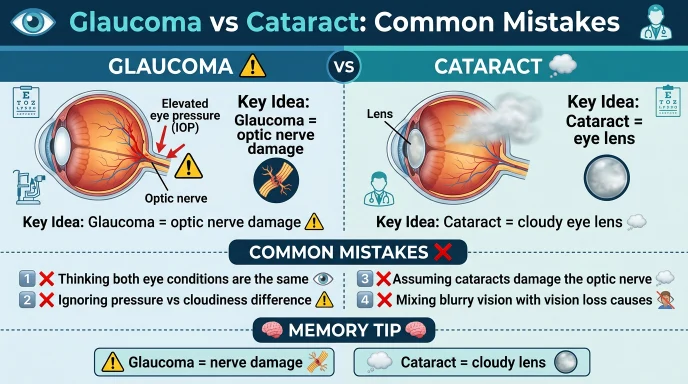
Thinking Glaucoma and Cataract Are the Same Eye Disease
❌ Glaucoma and cataracts are identical conditions.
✅ Glaucoma affects the optic nerve, while cataracts affect the eye lens.
Ignoring Vision Loss Differences
❌ Both conditions cause the exact same type of blurry vision.
✅ Glaucoma often affects side vision, while cataracts cloud overall vision.
Using Terms Incorrectly
❌ Cataracts damage the optic nerve directly.
✅ Glaucoma mainly damages the optic nerve.
Assuming Cataract Surgery Fixes Glaucoma
❌ Cataract surgery automatically cures glaucoma.
✅ They are separate eye conditions requiring different treatments.
Ignoring Silent Symptoms
❌ Glaucoma always causes obvious pain early.
✅ Many glaucoma cases develop quietly without noticeable symptoms.
Believing Vision Loss Is Always Reversible
❌ Glaucoma vision damage can always be fully restored.
✅ Optic nerve damage is often permanent.
🧑⚕️ Real Life Examples with Glaucoma and Cataract
- Older adults developing cloudy vision from cataracts
- Eye pressure monitoring for glaucoma detection
- Cataract surgery improving visual clarity
- Peripheral vision testing during glaucoma exams
- Difficulty driving at night because of cataracts
- Regular eye screenings preventing severe vision loss
🎯 When Glaucoma or Cataract Treatment Becomes Important
- Blurry or foggy vision → cataract evaluation common
- Side vision loss → glaucoma testing important
- Aging related vision changes → eye exams recommended
- Increased eye pressure → glaucoma monitoring needed
- Difficulty reading or driving → cataract assessment common
- Family history of glaucoma → regular screenings important
🤔 Why People Get Confused in Glaucoma and Cataract
- Both affect eyesight
- Both become more common with aging
- Similar medical discussions overlap
- Vision problems may appear gradually
- Many people associate all vision loss with cataracts
🧠 How Eye Care Systems Understand Glaucoma and Cataract
Eye care systems analyze:
- Optic nerve health
- Lens clarity
- Eye pressure levels
- Peripheral vision
- Daily visual performance
- Risk of future vision loss
This helps ophthalmologists develop treatment and monitoring plans.
🧠 Expert Insight
The difference between glaucoma and cataract mainly comes from optic nerve damage versus lens clouding. Glaucoma affects the nerve responsible for transmitting visual information to the brain, while cataracts affect the lens responsible for focusing light clearly.
In practical eye care, cataracts are often treatable with surgery, while glaucoma management focuses on slowing or preventing further vision damage. Regular eye exams remain one of the most important tools for protecting long term vision health.
❓ FAQ: Difference Between Glaucoma and Cataract
1. What is the main difference between glaucoma and cataract?
Glaucoma damages the optic nerve, while cataracts cloud the eye lens.
2. Can glaucoma cause permanent blindness?
Yes, untreated glaucoma may lead to permanent vision loss.
3. Are cataracts treatable?
Yes, cataract surgery commonly improves vision.
4. Does glaucoma always cause pain?
No, many glaucoma cases develop without noticeable pain.
5. Why are cataracts common in older adults?
The natural lens changes and becomes cloudy with age.
6. Can a person have both glaucoma and cataracts?
Yes, both conditions may occur together.
7. Why do people confuse glaucoma and cataract?
Because both affect vision and are common age related eye conditions.
🧾 Conclusion
The difference between glaucoma and cataract comes from optic nerve damage versus lens clouding. Glaucoma affects the optic nerve and may cause permanent vision loss, while cataracts cloud the eye lens and often cause blurry or foggy vision that may improve with surgery.
Understanding the difference between glaucoma and cataract helps people recognize eye health changes and understand why regular eye examinations are important. Once you connect glaucoma with optic nerve damage and cataracts with cloudy lenses, the distinction becomes much easier to understand in eye care and vision health.
Discover More Articles:

Hi, I’m Nabeel Hassan. I love exploring interesting topics and explaining how different things compare with each other. Through my writing, I aim to provide clear, helpful, and easy to read explanations. I cover subjects related to learning, science, technology and general knowledge.