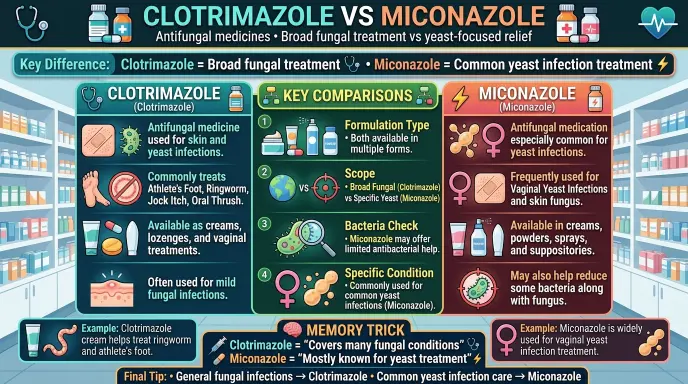
The difference between clotrimazole and miconazole is that both are antifungal medications used to treat fungal infections, but they differ in formulation, usage areas, brand availability, and how doctors commonly prescribe them for specific conditions.
Many people search for the difference between clotrimazole and miconazole because both medicines are used for similar fungal problems like yeast infections, athlete’s foot, ringworm, and skin irritation, making them easy to confuse.
In simple words, both medicines fight fungus, but the type of infection, treatment area, product form, and medical recommendation can vary. Understanding the difference between clotrimazole and miconazole helps patients better recognize how antifungal treatments are used in real medical situations.
💡 Quick Answer: Difference Between Clotrimazole or Miconazole
Clotrimazole and miconazole are antifungal medicines used for similar fungal infections, but they differ in formulations, treatment focus, and product availability.
👉 Example:
A pharmacy may sell clotrimazole cream for athlete’s foot, while miconazole may also appear in vaginal antifungal treatments or oral gels.
📘 Definition of Clotrimazole and Miconazole
- Clotrimazole: An antifungal medication used to treat fungal skin infections, yeast infections, and related conditions.
- Miconazole: An antifungal medication used for fungal skin infections, yeast infections, and some oral fungal conditions.
🗣️ Pronunciation (US & UK)
- Clotrimazole
- US: /kloʊˈtrɪməˌzoʊl/
- UK: /klɒˈtrɪməzəʊl/
- Miconazole
- US: /maɪˈkɑːnəˌzoʊl/
- UK: /maɪˈkɒnəzəʊl/
These medications are commonly discussed in dermatology, pharmacy care, gynecology, and fungal infection treatment.
📊 Comparison Table: Clotrimazole vs Miconazole
| Feature | Clotrimazole | Miconazole | Similarity |
| Main Purpose | Treat fungal infections | Treat fungal infections | Both are antifungal medicines |
| Common Usage | Skin and yeast infections | Skin, yeast, and oral fungal infections | Both fight fungus growth |
| Product Forms | Creams, tablets, sprays | Creams, powders, gels, suppositories | Both come in topical forms |
| Vaginal Treatments | Commonly available | Commonly available | Both used for yeast infections |
| Oral Applications | Less common | Oral gel versions available | Both require proper medical use |
| Infection Types | Athlete’s foot, ringworm, yeast infections | Similar fungal conditions | Both belong to azole antifungals |
| Availability | Widely available | Widely available | Both sold under multiple brands |
| Treatment Goal | Stop fungal growth | Stop fungal growth | Both reduce fungal symptoms |
This table clearly shows the difference and similarity between clotrimazole and miconazole for quick understanding.
🧠 Key Differences Explained Between Miconazole and Clotrimazole
🧴 Product Form Differences
The biggest difference between clotrimazole and miconazole is formulation variety. Miconazole commonly appears in oral gels and multiple specialized forms, while clotrimazole is often recognized for creams and topical antifungal treatments.
👉 Example:
Miconazole oral gel may be used for oral fungal infections.
🦶 Common Infection Usage
Both medicines treat:
- Athlete’s foot
- Ringworm
- Yeast infections
- Jock itch
But doctors may recommend one more often depending on infection location.
👄 Oral Fungal Treatment
Miconazole has oral gel forms used in some oral fungal conditions.
🌸 Vaginal Yeast Infection Products
Both medications appear in vaginal antifungal treatments sold in pharmacies.
👉 Example:
Some over-the-counter yeast infection kits may contain miconazole or clotrimazole.
💊 Brand and Pharmacy Availability
Availability may vary by country, pharmacy, and product brand.
⚕️ Medical Recommendation
Doctors choose medications based on:
- Infection type
- Severity
- Body area
- Patient history
⏳ Treatment Duration
Treatment schedules can differ depending on infection and medication form.
🧠 Why Clotrimazole and Miconazole Get Confused
The difference between clotrimazole and miconazole becomes confusing because both:
- Treat fungal infections
- Belong to azole antifungals
- Come in creams and topical forms
- Treat similar symptoms
- Are sold in pharmacies without prescription in some countries
🌐 How Medical Systems Use Clotrimazole and Miconazole
Healthcare systems classify:
- Clotrimazole as a broad antifungal treatment
- Miconazole as another azole antifungal with varied formulations
Organizations like World Health Organization and pharmacy systems categorize these medications based on:
- Active ingredients
- Infection type
- Treatment location
- Dosage form
Pharmacy education resources and medical platforms also compare antifungal options for patients and healthcare professionals.
📊 Difference + Similarity Table
| Feature | Clotrimazole | Miconazole | Similarity |
| Meaning | Antifungal medication | Antifungal medication | Both treat fungal infections |
| Common Forms | Creams and sprays | Creams, gels, powders | Both come in topical products |
| Oral Treatment Use | Less common | Oral gel forms available | Both belong to azole antifungals |
| Vaginal Infection Use | Commonly used | Commonly used | Both treat yeast infections |
| Infection Focus | Skin and fungal conditions | Skin and oral fungal conditions | Both stop fungal growth |
| Availability | Widely available | Widely available | Both sold under brand names |
| Medical Category | Azole antifungal | Azole antifungal | Both require proper usage |
| Treatment Goal | Reduce fungal infection | Reduce fungal infection | Both improve fungal symptoms |
This table clearly shows the difference and similarity between clotrimazole and miconazole for quick understanding.
🧬 Deep Explanation: Why Antifungal Medicines Can Seem Similar
Many antifungal medicines belong to the azole family, meaning they work by disrupting fungal cell processes. Because of this:
- Symptoms treated may overlap
- Product packaging may look similar
- Pharmacy recommendations can vary by country
- Different formulations target different body areas
👉 Example:
- Skin creams may treat athlete’s foot
- Vaginal suppositories may treat yeast infections
- Oral gels may target mouth fungal conditions
This overlap makes clotrimazole and miconazole easy for patients to confuse.
⚠️ Common Mistakes with Difference Between Clotrimazole and Miconazole
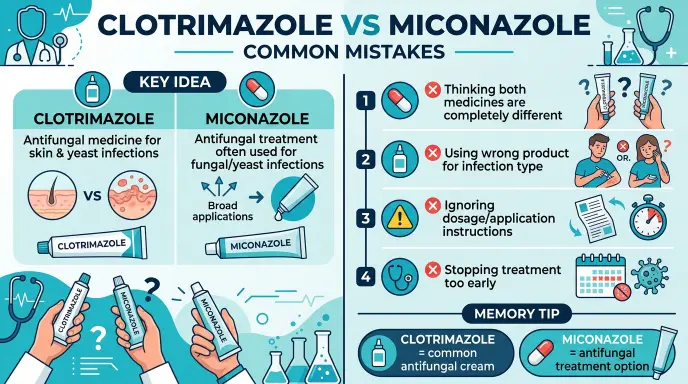
Thinking Clotrimazole and Miconazole Are Completely Identical
❌ Clotrimazole and miconazole are exactly the same medicine.
✅ They are different antifungal medications with different formulations.
Ignoring Infection Location
❌ Every fungal infection should use the same product.
✅ Treatment depends on the affected body area.
Assuming Faster Relief Means Better Medicine
❌ One medicine is always universally stronger.
✅ Effectiveness depends on infection type and proper treatment.
Stopping Treatment Too Early
❌ Symptoms disappearing means treatment should stop immediately.
✅ Many fungal treatments require completing the recommended course.
Confusing Brand Names with Active Ingredients
❌ Different brand names always mean different medications.
✅ Multiple brands may contain similar active ingredients.
🧑⚕️ Real Life Examples with Clotrimazole and Miconazole
- Athlete’s foot cream treatments
- Vaginal yeast infection medications
- Oral fungal gel prescriptions
- Pharmacy antifungal recommendations
- Ringworm treatment creams
- Skin irritation caused by fungal infections
🎯 When Doctors Use Clotrimazole or Miconazole
- Skin fungal infections → either may be recommended
- Oral fungal conditions → miconazole oral gel may be used
- Vaginal yeast infections → both commonly available
- Athlete’s foot → topical antifungal creams
- Ringworm treatment → antifungal creams or sprays
- Jock itch → antifungal topical treatment
🤔 Why People Get Confused in Clotrimazole and Miconazole
- Similar medical purpose
- Similar medication category
- Similar fungal symptoms treated
- Similar cream packaging
- Pharmacy shelves display both products together
🧠 How Medical Systems Understand Clotrimazole and Miconazole
Healthcare systems analyze:
- Active ingredient type
- Fungal infection location
- Dosage form
- Treatment duration
- Patient safety considerations
This helps healthcare professionals choose suitable antifungal treatments.
🧠 Expert Insight
The difference between clotrimazole and miconazole mainly comes from formulation variety, treatment applications, and medical usage patterns. Both are important antifungal medications that treat many similar infections, but certain product forms and treatment situations may make one option more suitable than another.
In practical healthcare settings, medication choice depends more on infection type, location, and professional recommendation than simple brand recognition.
❓ FAQ: Difference Between Miconazole or Clotrimazole
1. What is the main difference between clotrimazole and miconazole?
Both are antifungal medicines, but they differ in formulations and treatment applications.
2. Can both treat yeast infections?
Yes, both are commonly used for yeast infections.
3. Is miconazole used orally?
Some miconazole products are available as oral gels.
4. Are both available as creams?
Yes, both commonly come in cream form.
5. Do they treat athlete’s foot?
Yes, both may be used for fungal skin infections like athlete’s foot.
6. Why do people confuse these medications?
Because they treat similar fungal infections and belong to the same antifungal category.
7. Should treatment stop when symptoms improve?
Treatment usually should continue as directed to fully manage fungal infections.
🧾 Conclusion
The difference between clotrimazole and miconazole comes from formulation type, treatment applications, and medication usage patterns. Both antifungal medicines used to treat fungal infections, yeast infections, and skin conditions, but certain formulations and medical uses may differ depending on the situation.
Understanding the difference between clotrimazole and miconazole helps patients better recognize antifungal treatment options and communicate more clearly with healthcare professionals. Once you connect clotrimazole with common topical antifungal treatment and miconazole with broader formulation variety including oral gels, the distinction becomes easier to understand in practical medical care.
Discover More Articles:

I’m Owen Parker, and I write articles that focus on explaining the differences between common concepts, tools, and ideas. I enjoy simplifying complex information and turning it into clear comparisons that anyone can understand. My work often covers science , education, technology, and everyday knowledge topics.