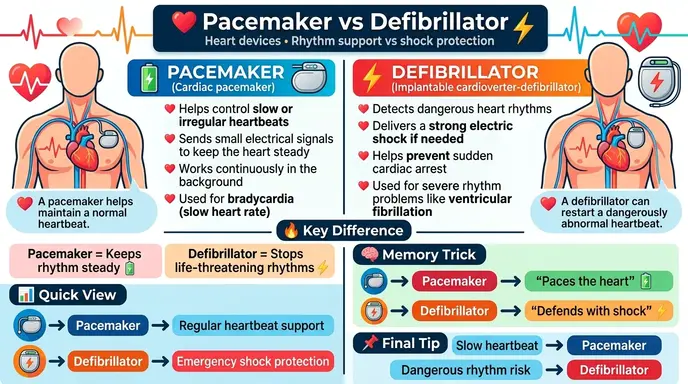
The difference between pacemaker and defibrillator is that a pacemaker helps regulate slow or irregular heartbeats with steady electrical signals, while a defibrillator can deliver a stronger shock to stop dangerous life threatening heart rhythms.
Many people get confused about the difference between pacemaker and defibrillator because both are medical devices implanted near the heart and both use electrical impulses. However, they serve different purposes and treat different heart conditions.
If you’ve ever wondered what is pacemaker vs defibrillator, which device controls heart rhythm, or how doctors decide between them, this guide will clearly explain the difference between pacemaker and defibrillator in simple and practical language.
⚡ Quick Answer: Difference Between Pacemakeror Defibrillator
- Pacemaker: Helps maintain a regular heartbeat when the heart beats too slowly
- Defibrillator: Detects dangerous heart rhythms and delivers shocks to restore normal rhythm
👉 Example: A pacemaker supports slow heart rhythms, while a defibrillator may save someone during a life threatening arrhythmia.
📖 Definition of Pacemaker and Defibrillator
- Pacemaker: A small implanted device that sends electrical impulses to help the heart beat at a proper rate and rhythm.
- Defibrillator: A device that monitors heart rhythm and can deliver a high energy shock if dangerous arrhythmias occur.
🔊 Pronunciation (US & UK)
- Pacemaker: UK /ˈpeɪsˌmeɪ.kər/ | US /ˈpeɪsˌmeɪ.kɚ/
- Defibrillator: UK /diːˈfɪb.rɪ.leɪ.tər/ | US /diːˈfɪb.rə.leɪ.t̬ɚ/
Now let’s understand their differences clearly.
📊 Pacemaker vs Defibrillator Comparison Table
| Feature | Pacemaker | Defibrillator |
| Main Purpose | Regulates slow heartbeat | Stops dangerous rhythms |
| Electrical Output | Small regular impulses | Strong emergency shocks |
| Treats | Bradycardia and rhythm issues | Ventricular arrhythmias |
| Emergency Shock Capability | No | Yes |
| Heart Rhythm Monitoring | Yes | Yes |
| Life Saving Shock | No | Yes |
| Common Implant Area | Chest | Chest |
| Main Goal | Keep heartbeat steady | Prevent sudden cardiac death |
🔍 KEY DIFFERENCES EXPLAINED BETWEEN PACEMAKER AND DEFIBRILLATOR
❤️ Purpose of the Device
Pacemakers help maintain regular heart rhythm when the heart beats too slowly. Defibrillators respond to dangerous rapid rhythms that may cause cardiac arrest.
👉 Example: Pacemakers support rhythm stability during daily life.
⚡ Strength of Electrical Signals
Pacemakers use gentle electrical pulses, while defibrillators can deliver powerful shocks during emergencies.
👉 Example: A defibrillator shock can restart a dangerously unstable heartbeat.
🚑 Medical Conditions Treated
Pacemakers commonly treat bradycardia and rhythm disorders. Defibrillators treat life threatening arrhythmias like ventricular fibrillation.
👉 Example: Defibrillators help reduce sudden cardiac death risk.
📡 Monitoring Function
Both devices monitor heart activity, but defibrillators continuously watch for dangerous emergency rhythms requiring immediate intervention.
👉 Example: ICD devices react automatically during severe rhythm problems.
🏥 Emergency Response Capability
Pacemakers generally do not provide emergency shocks. Defibrillators can automatically shock the heart during critical situations.
👉 Example: An implanted defibrillator may save a patient during cardiac arrest.
🔋 Device Complexity
Defibrillators are often more complex because they combine rhythm monitoring, pacing functions, and emergency shock capability.
👉 Example: Some ICDs also function as pacemakers.
🤔 What Is the Difference Between Defibrillator and Pacemaker in Simple Words?
In simple words, a pacemaker helps the heart beat regularly when it is too slow, while a defibrillator protects against dangerous heart rhythms by delivering emergency shocks if needed.
👉 Pacemaker = rhythm support
👉 Defibrillator = emergency protection
🧠 Why Are Pacemakers and Defibrillators Important?
Both devices help manage serious heart rhythm conditions.
Pacemakers help patients with:
- Slow heartbeats
- Irregular heart rhythm
- Fainting from rhythm problems
- Heart conduction disorders
Defibrillators help patients with:
- Dangerous arrhythmias
- Sudden cardiac arrest risk
- Severe ventricular rhythm disorders
- Emergency heart rhythm stabilization
👉 Both devices improve patient safety and heart function.
🌍 Difference Between Pacemaker and Defibrillator in Real Life
In practical cardiology:
- Pacemakers are commonly used for rhythm support
- Defibrillators are used for higher risk cardiac patients
- Some advanced devices combine both functions
👉 Treatment depends on the patient’s heart condition.
⚖️ DIFFERENCE + SIMILARITY TABLE
| Feature | Pacemaker | Defibrillator | Similarity |
| Medical Device | Yes | Yes | Cardiac technology |
| Implanted Near Heart | Yes | Yes | Chest implantation |
| Uses Electrical Signals | Yes | Yes | Heart rhythm control |
| Monitors Heart Activity | Yes | Yes | Cardiac monitoring |
| Requires Medical Procedure | Yes | Yes | Surgical placement |
| Helps Heart Rhythm | Yes | Yes | Cardiology treatment |
| Battery Powered | Yes | Yes | Electronic device |
| Used by Cardiologists | Yes | Yes | Heart care |
This table clearly shows the difference and similarity between difference between pacemaker and defibrillator for quick understanding.
❌ Common Mistakes with Pacemaker or Defibrillator
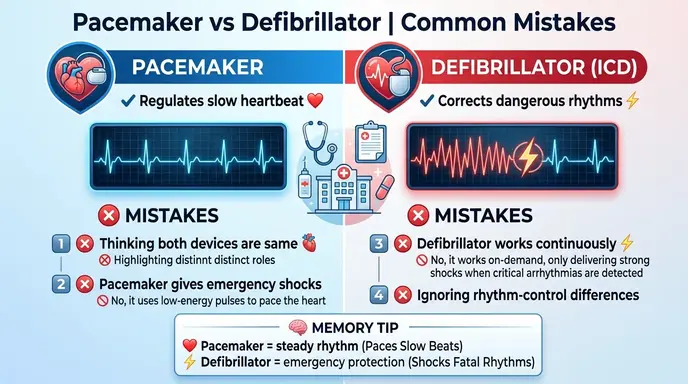
Thinking They Are the Same Device
❌ Pacemakers and defibrillators perform identical functions.
✅ They treat different heart rhythm problems.
Purpose differs.
Assuming Pacemakers Deliver Emergency Shocks
❌ Pacemakers shock the heart during cardiac arrest.
✅ Defibrillators provide emergency shocks.
Shock capability matters.
Believing Defibrillators Only Exist in Hospitals
❌ Defibrillators are only external emergency machines.
✅ Some defibrillators are implanted inside the body.
ICDs exist internally.
Ignoring Heart Rhythm Severity
❌ All rhythm problems require defibrillators.
✅ Some patients only need pacing support.
Condition severity differs.
Thinking Defibrillators Constantly Shock the Heart
❌ Defibrillators shock continuously.
✅ Shocks occur only during dangerous rhythms.
Emergency response is selective.
🏡 Real Life Examples with Pacemaker and Defibrillator
❤️ Slow Heart Rhythm Support
Pacemakers help patients maintain stable heartbeat rates.
🚨 Sudden Cardiac Arrest Protection
Defibrillators can respond during dangerous arrhythmias.
🏥 Cardiology Treatment Plans
Doctors choose devices based on rhythm abnormalities.
⚡ Emergency Rhythm Correction
Defibrillators may deliver life saving shocks automatically.
🎯 WHEN TO USE EACH
Use Pacemaker When:
✔ Discussing slow heart rhythms
✔ Talking about steady pacing support
✔ Referring to bradycardia treatment
✔ Explaining heart rhythm regulation
Use Defibrillator When:
✔ Discussing emergency rhythm correction
✔ Talking about cardiac arrest prevention
✔ Referring to dangerous arrhythmias
✔ Explaining shock delivery devices
🤯 WHY PEOPLE GET CONFUSED IN PACEMAKER AND DEFIBRILLATOR
- Both are implanted heart devices
- Both use electrical impulses
- Both monitor heart rhythms
- Some defibrillators also include pacing functions
⚙️ How Cardiologists Understand Pacemaker vs Defibrillator
Heart specialists separate these devices based on:
- Rhythm severity
- Shock capability
- Heartbeat speed problems
- Sudden cardiac arrest risk
👉 Pacemakers support slow rhythms, while defibrillators protect against dangerous emergency arrhythmias.
🧑⚕️ EXPERT INSIGHT
In real cardiac care, pacemakers and defibrillators address very different levels of heart rhythm risk. Pacemakers mainly improve quality of life and rhythm stability for patients with slow or irregular heartbeats. Defibrillators, especially implantable cardioverter defibrillators (ICDs), are designed to detect and stop potentially fatal arrhythmias before sudden cardiac arrest occurs.
One important insight many people overlook is that some advanced defibrillators also contain pacemaker functions, allowing them to both pace the heart normally and deliver emergency shocks when necessary.
👉 Key insight:
Pacemakers maintain regular heart rhythm, while defibrillators provide emergency protection against life threatening arrhythmias.
❓ FAQ:
❓ What is the difference between pacemaker and defibrillator?
A pacemaker regulates slow heartbeats, while a defibrillator treats dangerous life threatening heart rhythms with shocks.
❓ Does a pacemaker shock the heart?
Pacemakers use small electrical impulses, not large emergency shocks.
❓ What does a defibrillator do?
A defibrillator detects dangerous arrhythmias and can deliver a strong corrective shock.
❓ Can someone have both devices?
Some implanted devices combine pacemaker and defibrillator functions.
❓ Are both devices implanted in the chest?
Yes, both are commonly implanted near the chest area.
❓ Which device prevents sudden cardiac death?
Defibrillators help prevent sudden cardiac death from severe arrhythmias.
❓ Do pacemakers monitor heart rhythm?
Yes, pacemakers monitor and regulate heart rhythm.
❓ Are defibrillator shocks constant?
No, shocks occur only during dangerous heart rhythm emergencies.
🏁 Conclusion
The difference between pacemaker and defibrillator mainly comes down to rhythm support versus emergency protection. Pacemakers help regulate slow or irregular heartbeats using gentle electrical impulses, while defibrillators monitor for dangerous arrhythmias and deliver powerful shocks during emergencies.
Understanding this difference helps explain why doctors choose different heart devices for different cardiac conditions. In simple terms, pacemakers maintain heartbeat stability, while defibrillators protect against life threatening rhythm problems.
Once you understand the purpose and function of each device, the difference between pacemaker and defibrillator becomes much easier to recognize.
Discover More Articles:

Hi, I’m Nabeel Hassan. I love exploring interesting topics and explaining how different things compare with each other. Through my writing, I aim to provide clear, helpful, and easy to read explanations. I cover subjects related to learning, science, technology and general knowledge.