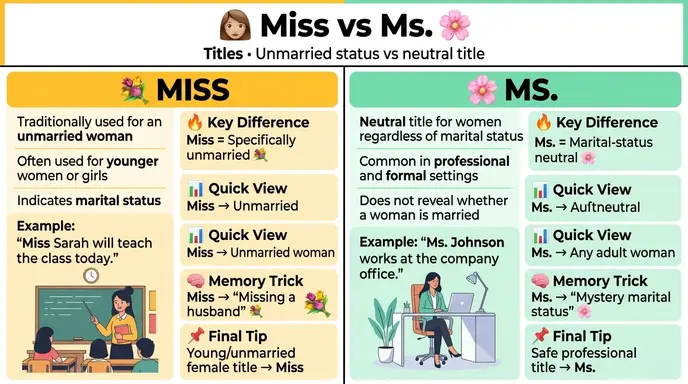
The difference between Miss and Ms is that “Miss” is traditionally used for unmarried women, while “Ms” is a neutral title that does not indicate marital status.
Many people search for the difference between Miss and Ms because these titles appear in formal communication, school settings, business emails, applications, and social interactions, yet their meaning and usage can differ depending on context.
In simple words, Miss focuses on unmarried status, while Ms works as a more general and widely accepted respectful title for women regardless of marital status. Understanding the difference between Miss and Ms helps improve professional communication, etiquette, workplace interaction, and respectful language use.
💡 Quick Answer: Difference Between Miss or Ms
Miss commonly used for unmarried women, while Ms used without mentioning marital status.
👉 Example:
“Miss Taylor” may suggest an unmarried woman, while “Ms Taylor” avoids referring to marital status completely.
📘 Definition of Miss and Ms
- Miss: A traditional title commonly used for unmarried women or girls.
- Ms: A neutral title used for women regardless of whether they are married or unmarried.
🗣️ Pronunciation (US & UK)
- Miss
- US: /mɪs/
- UK: /mɪs/
- Ms
- US: /mɪz/
- UK: /mɪz/
These titles commonly used in schools, workplaces, formal documents, customer service, business communication, and professional introductions.
📊 Comparison Table: Miss vs Ms
| Feature | Miss | Ms | Similarity |
| Main Meaning | Title for unmarried women | Neutral title for women | Both are respectful female titles |
| Marital Status Reference | Usually indicates unmarried status | Does not indicate marital status | Both used before surnames |
| Common Usage | Traditional or younger contexts | Professional and general contexts | Both appear in formal communication |
| Workplace Preference | Less common in business settings | Widely preferred professionally | Both show politeness |
| Modern Usage | Sometimes viewed as traditional | Common in modern communication | Both recognized globally |
| Educational Usage | Frequently used for teachers | Also used for teachers | Both used in schools |
| Professional Tone | Can sound personal or traditional | More neutral and professional | Both are respectful forms of address |
| Social Context | Often associated with youth or unmarried women | Suitable for most adult women | Both part of English etiquette |
This table clearly shows the difference and similarity between Miss and Ms for quick understanding.
🧠 Key Differences Explained Between Ms and Miss
👩 Marital Status Meaning
The biggest difference between Miss and Ms is marital status. Miss traditionally refers to unmarried women, while Ms avoids mentioning marital status completely.
👉 Example:
Business forms often use “Ms” because it is neutral and professional.
💼 Professional Communication
Ms widely preferred in workplaces and formal business settings.
📚 Traditional vs Modern Usage
Miss has older traditional associations, while Ms became popular for more neutral communication.
👉 Example:
Professional emails commonly use “Ms” unless someone specifically prefers “Miss.”
🎓 Educational Settings
Teachers may called Miss or Ms depending on personal preference and regional customs.
🌍 Social and Cultural Influence
Different countries and cultures may use these titles differently.
✉️ Formal Writing Style
Ms often considered safer when marital status is unknown.
🤝 Respectful Communication
Using preferred titles helps maintain professionalism and respect.
🧠 Why Miss and Ms Get Confused
The difference between Miss and Ms becomes confusing because both titles are used for women and sound somewhat similar in conversation. Many people also grow up hearing both terms without learning the difference in formality and marital status meaning.
🌐 How Communication Systems Use Miss and Ms
Modern communication systems classify:
- Miss as a title traditionally linked to unmarried status
- Ms as a neutral professional title
Companies like Microsoft, Google, and LinkedIn often include title options like Miss and Ms in forms, professional profiles, and communication systems.
Professional workplaces generally prefer neutral respectful language, making “Ms” more common in modern business communication.
📊 Difference + Similarity Table
| Feature | Miss | Ms | Similarity |
| Meaning | Title for unmarried women | Neutral title regardless of marital status | Both are female honorific titles |
| Marital Status | Traditionally unmarried | Marital status not specified | Both used before names |
| Communication Style | Traditional and personal | Neutral and professional | Both show respect |
| Common Workplace Use | Less common professionally | Widely used in workplaces | Both appear in formal settings |
| Educational Usage | Common for younger teachers | Common for professional teachers | Both used in schools |
| Modern Popularity | More traditional usage | More modern professional usage | Both accepted in English |
| Social Context | Often linked to youth or unmarried women | Suitable for adult women generally | Both used globally |
| Reader Interpretation | May imply unmarried status | Usually avoids assumptions | Both identify respectful address |
This table clearly shows the difference and similarity between Miss and Ms for quick understanding.
💬 Deep Explanation: Why “Ms” Became More Common
The rise of “Ms” came from the need for neutral professional communication:
- Many women preferred privacy regarding marital status
- Professional communication shifted toward equality and neutrality
- “Ms” became widely accepted in workplaces and official documents
👉 Example:
- “Mr” does not reveal marital status for men
- “Ms” became a similar neutral option for women
Today, many organizations prefer “Ms” when personal preference is unknown.
⚠️ Common Mistakes with Difference Between Miss and Ms
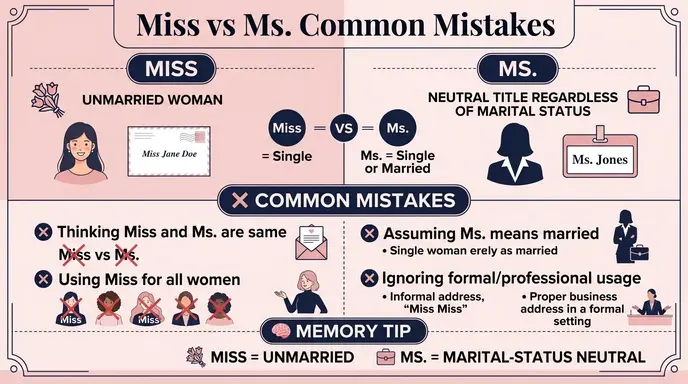
Thinking Miss and Ms Mean Exactly the Same Thing
❌ Miss and Ms are identical titles.
✅ Miss traditionally indicates unmarried status, while Ms is neutral.
Assuming Every Woman Prefers Miss
❌ All women prefer the title Miss.
✅ Many adults prefer Ms in professional communication.
Ignoring Professional Context
❌ Miss is always the best workplace title.
✅ Ms is generally more neutral and professional.
Using Terms Incorrectly
❌ Ms automatically means married woman.
✅ Ms does not indicate marital status.
Assuming Titles Required
❌ Every formal message must include Miss or Ms.
✅ Some people prefer no title at all.
🧑💼 Real Life Examples with Miss and Ms
- School students calling a teacher Miss Ahmed
- Business emails using Ms Johnson
- Official forms offering Miss and Ms options
- Workplace introductions using Ms for neutrality
- Customer service communication using respectful titles
- Professional networking profiles using Ms
🎯 When to Use Miss or Ms
- Referring to unmarried girls or women traditionally → Miss
- Professional or neutral communication → Ms
- Marital status unknown → Ms
- Formal workplace emails → Ms
- Personal preference for Miss → Miss
- General respectful communication → Ms commonly preferred
🤔 Why People Get Confused in Miss and Ms
- Both are female titles
- Pronunciation can sound similar in conversation
- Social customs vary by region
- Schools commonly use Miss informally
- Many people are not taught the distinction clearly
🧠 How Language and Communication Systems Understand Miss and Ms
Modern communication systems analyze:
- Formality level
- Professional tone
- User preferences
- Cultural expectations
- Respectful address conventions
This helps businesses and communication platforms support inclusive and professional language practices.
🧠 Expert Insight
The difference between Miss and Ms mainly involves marital status reference and communication style. Miss traditionally refers to unmarried women, while Ms functions as a neutral respectful title that avoids assumptions about marital status.
In practical communication, “Ms” is often the safest and most professional choice unless someone specifically prefers another title.
❓ FAQ: Difference Between Ms or Miss
1. What is the main difference between Miss and Ms?
Miss traditionally refers to unmarried women, while Ms does not indicate marital status.
2. Is Ms used for married women?
Yes, Ms can be used regardless of marital status.
3. Which title is more professional?
Ms generally considered more neutral and professional.
4. Can unmarried women use Ms?
Yes, many unmarried women prefer Ms.
5. How Ms pronounced?
Ms commonly pronounced “miz.”
6. Why did Ms become popular?
It became popular as a neutral professional title similar to “Mr.”
7. Is Miss outdated?
Not completely, but Ms is more common in modern professional communication.
🧾 Conclusion
The difference between Miss and Ms comes from marital status reference and communication style. Miss traditionally refers to unmarried women, while Ms is a neutral respectful title that works regardless of marital status.
Understanding the difference between Miss and Ms helps improve professional etiquette, respectful communication, and formal writing skills. Once you connect Miss with traditional unmarried usage and Ms with neutral modern communication, the distinction becomes much easier to understand in schools, workplaces, and everyday interactions.
Discover More Articles:

Hi, I’m Nabeel Hassan. I love exploring interesting topics and explaining how different things compare with each other. Through my writing, I aim to provide clear, helpful, and easy to read explanations. I cover subjects related to learning, science, technology and general knowledge.