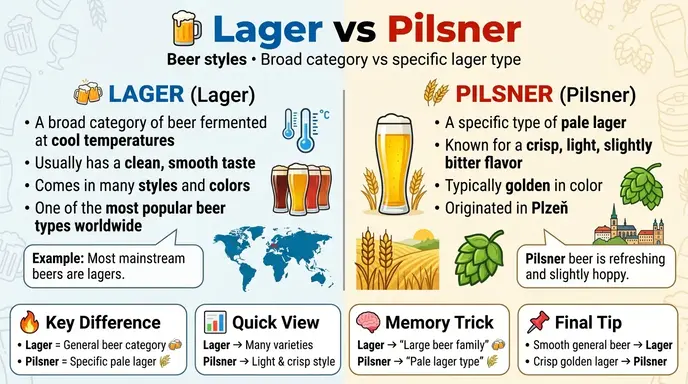
The difference between lager and pilsner is that lager is a broad category of beer, while pilsner is a specific type of lager with a lighter color, crisp taste, and stronger hop flavor.
Many people search for the difference between lager and pilsner because both beers look similar and are often served in the same settings. However, their flavor, brewing style, ingredients, and origin are different.
In simple words, every pilsner is a lager, but not every lager is a pilsner. Understanding the difference between lager and pilsner helps beer lovers choose drinks more confidently in restaurants, bars, grocery stores, and social gatherings.
💡 Quick Answer: Difference Between Lager or Pilsner
Lager is a general beer category, while pilsner is a specific pale lager style known for its crisp and slightly bitter taste.
👉 Example: A dark lager and a pilsner are both lagers, but only the pilsner has the classic light golden color and hoppy flavor.
📘 Definition of Lager and Pilsner
- Lager: A type of beer brewed with bottom-fermenting yeast at cooler temperatures, creating a smooth and clean taste.
- Pilsner: A pale, golden lager originally created in the Czech city of Pilsen, known for its crisp and refreshing flavor.
🗣️ Pronunciation (US & UK)
- Lager
- US: /ˈlɑː.ɡɚ/
- UK: /ˈlɑː.ɡə/
- Pilsner
- US: /ˈpɪlz.nɚ/
- UK: /ˈpɪlz.nə/
These terms are commonly used in restaurants, breweries, and beverage menus worldwide.
📊 Comparison Table: Lager vs Pilsner
| Feature | Lager | Pilsner | Similarity |
| Type | Broad beer category | Specific lager style | Both are beers |
| Origin | Germany and Europe | Czech Republic | Both originated in Europe |
| Flavor | Smooth and mild | Crisp and hoppy | Both are refreshing |
| Color | Can be light or dark | Usually pale golden | Both can appear clear |
| Bitterness | Mild bitterness | More noticeable bitterness | Both use hops |
| Brewing Method | Bottom fermentation | Bottom fermentation | Both use lager yeast |
| Variety | Many styles available | Specific beer subtype | Both belong to lager family |
| Popular Use | Everyday beer choice | Premium light lager choice | Both served cold |
This table clearly shows the difference and similarity between lager and pilsner for quick understanding.
🧠 Key Differences Between Lager and Pilsner
🌍 Origin and History
Lager originated in Europe, especially Germany, while pilsner was first brewed in Pilsen, Czech Republic.
🌾 Flavor Profile
Lagers usually have a smooth and balanced flavor. Pilsners are crisper and have a stronger hop taste.
👉 Example: Pilsner often tastes sharper and more refreshing.
🎨 Color Appearance
Lagers can range from pale gold to dark brown. Pilsners are typically light golden.
🌿 Hop Bitterness
Pilsners usually contain more hops, giving them a slightly bitter finish compared to regular lagers.
❄️ Brewing Process
Both use bottom-fermenting yeast and cold fermentation, but pilsners often focus more on crispness and clarity.
🍻 Drinking Experience
Lagers are often easy-drinking and mild, while pilsners feel lighter, cleaner, and more refreshing.
🧠 Why Lager and Pilsner Exist
The difference between lager and pilsner developed because breweries created different beer styles to match regional tastes and brewing traditions. Pilsner became popular because drinkers enjoyed its bright color and refreshing taste compared to heavier older beers.
🏷️ How Breweries Use Pilsner and Lager Labels
Breweries use these labels to help customers understand flavor and style:
- Lager → broad beer category
- Pilsner → crisp pale lager style
- Premium brands often market pilsners as refreshing and refined beers
Restaurants and bars also separate these styles on menus for customer preference.
📊 Difference + Similarity Table
| Feature | Lager | Pilsner | Similarity |
| Meaning | General category of beer | Specific type of lager | Both are brewed beers |
| Brewing Style | Bottom-fermented beer | Bottom-fermented pale lager | Both use lager yeast |
| Taste | Smooth and balanced | Crisp and slightly bitter | Both are refreshing drinks |
| Color | Light to dark shades | Usually light golden | Both can appear clear |
| Origin | Europe, mainly Germany | Pilsen, Czech Republic | Both have European roots |
| Hop Flavor | Mild hop presence | Stronger hop flavor | Both contain hops |
| Variety | Includes many beer styles | One defined beer style | Both belong to beer culture |
| Serving Style | Served cold | Served cold | Both popular worldwide |
This table clearly shows the difference and similarity between lager and pilsner for quick understanding.
⚠️ Common Mistakes with Difference Between Lager and Pilsner
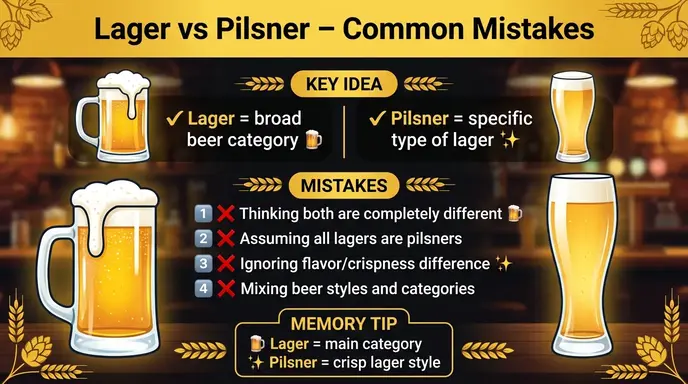
Thinking Lager and Pilsner Are Completely Different Drinks
❌ Lager and pilsner are unrelated beer types.
✅ Pilsner is actually a type of lager beer.
Assuming Every Lager Tastes the Same
❌ All lagers have identical flavor profiles.
✅ Lagers can vary from light and crisp to dark and rich.
Confusing Pilsner with Any Light Beer
❌ Every light-colored beer is a pilsner.
✅ A pilsner has specific brewing and flavor characteristics.
Ignoring Brewing Method Similarities
❌ Lager and pilsner use completely different brewing methods.
✅ Both use bottom fermentation and cooler brewing temperatures.
Believing Pilsner Is Always Stronger
❌ Pilsner always contains more alcohol than lager.
✅ Alcohol level depends on the specific beer recipe.
🧑💼 Real Life Examples with Lager and Pilsner
- A restaurant menu lists pilsner under lager beers
- A beer fan chooses pilsner for a crisp summer drink
- A dark lager provides a richer flavor than pilsner
- Breweries market pilsners as refreshing premium beers
- Casual drinkers often order lager as an easy-drinking option
🎯 When to Choose Lager or Pilsner
- Smooth and balanced beer → lager
- Crisp and hoppy taste → pilsner
- Variety of beer styles → lager
- Light refreshing experience → pilsner
- Mild bitterness → standard lager
- Sharper hop flavor → pilsner
🤔 Why People Get Confused
- Both are light-colored beers
- Both are served cold
- Pilsner belongs to lager category
- Restaurants often group them together
- Many brands use similar packaging and descriptions
🧠 How Beverage Systems Understand This Topic
The beverage industry classifies:
- Lager as a broad brewing category
- Pilsner as a specific lager subtype
Bars, breweries, and beverage menus use these classifications to help customers understand flavor expectations and beer style.
🧠 Expert Insight
The difference between lager and pilsner is mainly about beer classification and flavor profile. Lager represents a large family of beers, while pilsner is one of the most famous and widely consumed lager styles in the world.
In practical use, understanding these terms helps customers choose drinks based on bitterness, crispness, smoothness, and brewing style rather than simply color or branding.
❓ FAQ: Difference Between Lager and Pilsner
1. Is pilsner a type of lager?
Yes, pilsner is a specific style of lager beer.
2. Which tastes more bitter, lager or pilsner?
Pilsner usually has a more noticeable hop bitterness.
3. Are all pilsners lagers?
Yes, every pilsner belongs to the lager category.
4. Is lager darker than pilsner?
Some lagers can be darker, while pilsners are usually pale golden.
5. Which is more refreshing?
Many people consider pilsner more crisp and refreshing.
6. Do lager and pilsner use the same yeast?
Yes, both use bottom-fermenting lager yeast.
7. Why do people confuse lager and pilsner?
Because pilsner is part of the lager family and both often look similar.
🧾 Conclusion
The difference between lager and pilsner comes down to category versus style. Lager is a broad family of beers made with bottom fermentation, while pilsner is a pale and crisp type of lager first created in the Czech Republic. Although both share similar brewing methods, pilsners are usually lighter, hoppier, and more refreshing in flavor.
Understanding the difference between lager and pilsner helps beer drinkers choose beverages more confidently based on taste, bitterness, appearance, and drinking experience. Once you understand that every pilsner is a lager but not every lager is a pilsner, the distinction becomes very easy to remember.
Discover More Articles:

I’m Owen Parker, and I write articles that focus on explaining the differences between common concepts, tools, and ideas. I enjoy simplifying complex information and turning it into clear comparisons that anyone can understand. My work often covers science , education, technology, and everyday knowledge topics.