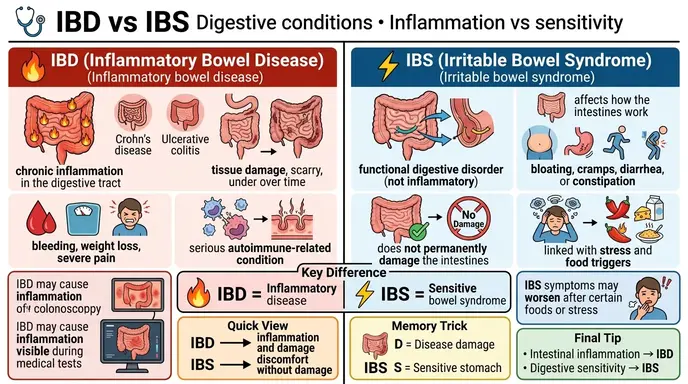
The difference between IBD and IBS is that IBD is a group of inflammatory diseases that physically damage the digestive tract, while IBS is a functional digestive disorder that affects bowel habits without causing visible intestinal damage.
Many people confuse the difference between IBD and IBS because both conditions can cause stomach pain, diarrhea, bloating, and bowel problems. However, they are very different in severity, causes, diagnosis, and long term effects.
If you’ve ever wondered what is IBD vs IBS, which condition is more serious, or how doctors tell them apart, this guide will clearly explain the difference between IBD and IBS in simple and practical language.
⚡ Quick Answer: Difference Between IBD and IBS
- IBD: Chronic inflammatory disease that damages the digestive tract
- IBS: Functional bowel disorder that affects digestion without inflammation damage
👉 Example: Crohn’s disease is a type of IBD, while irritable bowel syndrome is IBS.
📖 Definition of IBD and IBS
- IBD (Inflammatory Bowel Disease): A group of chronic diseases causing inflammation and physical damage in the digestive tract.
- IBS (Irritable Bowel Syndrome): A digestive disorder affecting bowel function and causing symptoms without visible intestinal damage.
🔊 Pronunciation (US & UK)
- IBD: UK /ˌaɪ.biːˈdiː/ | US /ˌaɪ.biːˈdiː/
- IBS: UK /ˌaɪ.biːˈes/ | US /ˌaɪ.biːˈes/
Now let’s understand their differences clearly.
📊 IBD vs IBS Comparison Table
| Feature | IBD | IBS |
| Full Form | Inflammatory Bowel Disease | Irritable Bowel Syndrome |
| Inflammation | Yes | Usually no |
| Intestinal Damage | Common | No visible damage |
| Severity | Often more serious | Usually less severe |
| Disease Type | Autoimmune/inflammatory | Functional disorder |
| Common Symptoms | Pain, bleeding, diarrhea | Bloating, cramps, bowel changes |
| Medical Testing | Inflammation visible | Tests often appear normal |
| Examples | Crohn’s disease, ulcerative colitis | IBS C, IBS D, IBS M |
🔍 KEY DIFFERENCES EXPLAINED BETWEEN IBD AND IBS
🔥 Inflammation and Tissue Damage
IBD causes inflammation that can damage the digestive tract, while IBS does not usually cause physical damage.
👉 Example: IBD may create ulcers in the intestines.
🩸 Severity of Symptoms
IBD symptoms can become severe and may include bleeding, weight loss, and nutritional problems. IBS symptoms are uncomfortable but usually less dangerous.
👉 Example: Blood in stool is more associated with IBD.
🧪 Medical Test Results
Doctors can often detect inflammation in IBD through scans, blood tests, or colonoscopy. IBS usually shows normal test results.
👉 Example: Colonoscopy may reveal intestinal inflammation in IBD patients.
🧬 Causes and Immune System Role
IBD is linked to immune system inflammation, while IBS is related more to bowel function, stress, and digestive sensitivity.
👉 Example: IBS may worsen during stress.
🚻 Digestive Symptoms
Both conditions can cause diarrhea, cramps, and bowel habit changes, but IBD often includes more severe complications.
👉 Example: Fatigue and malnutrition are more common in IBD.
⏳ Long Term Health Risks
IBD may increase the risk of complications and require stronger medical treatment. IBS usually does not damage organs permanently.
👉 Example: Untreated IBD can sometimes lead to serious intestinal problems.
🤔 What Is the Difference Between IBS and IBD in Simple Words?
In simple words, IBD is an inflammatory disease that damages the intestines, while IBS affects how the digestive system functions without causing visible damage.
👉 IBD = inflammation and damage
👉 IBS = digestive sensitivity and bowel dysfunction
🧠 Why Are IBD and IBS Confused?
Both affect the digestive system and share several symptoms.
Shared symptoms include:
- Stomach pain
- Diarrhea
- Bloating
- Cramping
- Bowel changes
Main difference:
- IBD causes inflammation and tissue damage
- IBS affects bowel function without damaging tissue
👉 Similar symptoms often cause confusion.
🌍 Difference Between IBD and IBS in Real Life
In practical situations:
- IBD often requires ongoing medical monitoring
- IBS symptoms may fluctuate with stress and diet
- Some people experience mild IBS, while IBD may require hospitalization in severe cases
👉 Proper diagnosis is important because treatment differs significantly.
⚖️ DIFFERENCE + SIMILARITY TABLE
| Feature | IBD | IBS | Similarity |
| Digestive Condition | Yes | Yes | Affects intestines |
| Causes Abdominal Pain | Yes | Yes | Shared symptom |
| May Cause Diarrhea | Yes | Yes | Bowel involvement |
| Chronic Condition | Often | Often | Long term management |
| Requires Medical Care | Yes | Yes | Healthcare support |
| Affects Daily Life | Yes | Yes | Lifestyle impact |
| Food Triggers Possible | Yes | Yes | Diet influence |
| Can Cause Bloating | Yes | Yes | Digestive discomfort |
This table clearly shows the difference and similarity between difference between IBD and IBS for quick understanding.
❌ Common Mistakes with IBD or IBS
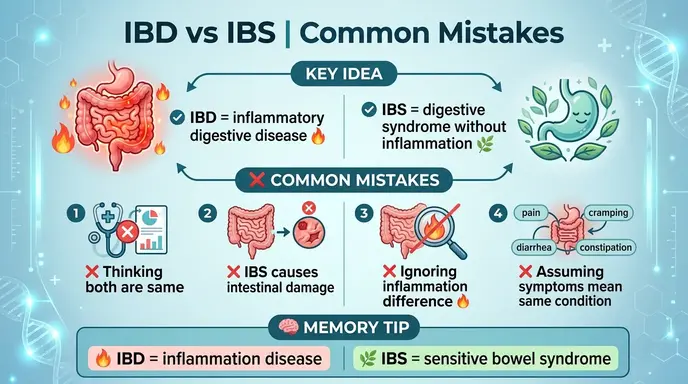
Thinking IBS Causes Intestinal Damage
❌ IBS damages the intestines permanently.
✅ IBS usually does not cause visible tissue damage.
Function differs from inflammation.
Assuming IBD and IBS Are the Same Disease
❌ IBD and IBS are identical conditions.
✅ They are completely different digestive disorders.
Medical classification matters.
Ignoring Serious IBD Symptoms
❌ Blood in stool is normal for IBS.
✅ Bleeding may indicate IBD or another serious condition.
Medical evaluation matters.
Believing Stress Causes IBD Directly
❌ Stress alone causes IBD.
✅ IBD involves immune related inflammation.
Causes are more complex.
Self Diagnosing Digestive Problems
❌ Digestive symptoms always mean IBS.
✅ Proper testing is important for accurate diagnosis.
Professional diagnosis matters.
🏡 Real Life Examples with IBD OR IBS
🚻 Frequent Bathroom Trips
Both IBS and IBD may cause urgent bowel movements.
🩸 Intestinal Inflammation
IBD can involve visible inflammation during medical testing.
😰 Stress Triggered Symptoms
IBS symptoms may worsen during stress or anxiety.
🍽️ Food Sensitivity Issues
Certain foods may trigger symptoms in both conditions.
🎯 WHEN TO USE EACH
Use IBD When:
✔ Referring to inflammatory bowel diseases
✔ Discussing intestinal damage or inflammation
✔ Talking about Crohn’s disease or ulcerative colitis
Use IBS When:
✔ Referring to irritable bowel syndrome
✔ Discussing digestive function problems
✔ Talking about bowel sensitivity without inflammation
🤯 WHY PEOPLE GET CONFUSED IN IBD AND IBS
- Similar abbreviations
- Shared digestive symptoms
- Both affect bowel habits
- Both involve chronic digestive discomfort
⚙️ How Doctors Understand IBD vs IBS
Doctors separate these conditions based on:
- Inflammation presence
- Colonoscopy findings
- Blood test results
- Severity and tissue damage
👉 Physical intestinal inflammation is a major difference.
🧑⚕️ EXPERT INSIGHT
In real medical practice, one of the biggest challenges is that IBD and IBS can initially appear very similar because both cause digestive discomfort and bowel changes. However, the underlying mechanisms are very different. IBD involves real inflammation and tissue injury inside the digestive tract, while IBS mainly affects how the digestive system functions.
One important insight many people overlook is that IBS can still seriously affect quality of life even though it does not cause visible intestinal damage. At the same time, untreated IBD may lead to significant complications, which is why proper diagnosis and medical care are essential.
👉 Key insight:
IBD causes inflammation and physical damage, while IBS affects digestive function without damaging the intestines.
❓ FAQ:
❓ What is the difference between IBD and IBS?
IBD causes inflammation and intestinal damage, while IBS affects bowel function without visible damage.
❓ Is IBD more serious than IBS?
Generally yes, because IBD can damage the digestive tract.
❓ Does IBS cause inflammation?
Usually no visible inflammation is found in IBS.
❓ What are examples of IBD?
Crohn’s disease and ulcerative colitis are common examples.
❓ Can stress affect IBS?
Yes, stress often worsens IBS symptoms.
❓ Does IBS cause bleeding?
Bleeding is more associated with IBD and should be medically evaluated.
❓ Are both chronic conditions?
Yes, both may require long term symptom management.
❓ Why is diagnosis important?
Treatment approaches differ significantly between IBD and IBS.
🏁 Conclusion
The difference between IBD and IBS mainly comes down to inflammation and intestinal damage. IBD is an inflammatory disease that physically harms the digestive tract, while IBS is a functional digestive disorder that affects bowel habits without visible tissue damage.
Understanding this difference is important because these conditions require different types of treatment, monitoring, and medical care. In simple terms, IBD involves inflammation and physical injury, while IBS mainly affects digestive function and sensitivity.
Once you understand how each condition affects the digestive system, the difference between IBD and IBS becomes much easier to recognize.
Discover More Articles:

Hi, I’m Nabeel Hassan. I love exploring interesting topics and explaining how different things compare with each other. Through my writing, I aim to provide clear, helpful, and easy to read explanations. I cover subjects related to learning, science, technology and general knowledge.