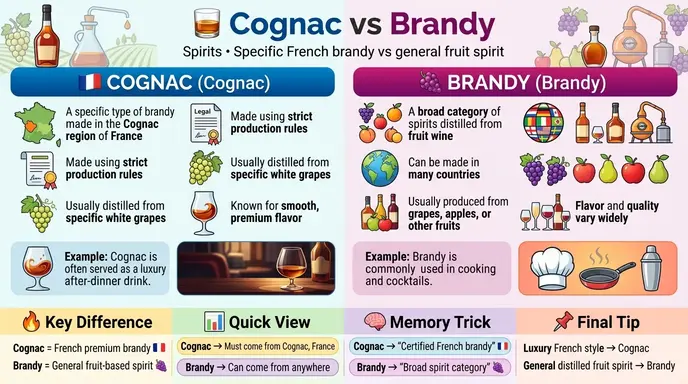
The difference between cognac and brandy is that all cognac is brandy, but not all brandy is cognac because cognac must follow strict production rules and come from a specific region in France.
Many people search for the difference between cognac and brandy because both drinks look similar and are made from grapes, yet they differ in origin, production standards, flavor, and aging methods.
Brandy is a broad category of distilled fruit spirits, while cognac is a premium type of brandy made under strict French regulations. Understanding the difference between cognac and brandy helps people choose the right drink for tasting, cooking, collecting, gifting, and special occasions.
💡 Quick Answer: Difference Between Cognac or Brandy
Brandy is a general distilled fruit spirit, while cognac is a specific type of French brandy made under strict regional rules.
👉 Example: A grape spirit produced in Spain may be called brandy, but only spirits made in the Cognac region of France can legally be called cognac.
📘 Definition of Cognac and Brandy
- Cognac: A premium French brandy produced in the Cognac region of France using specific grapes and traditional production methods.
- Brandy: A distilled alcoholic spirit usually made from fermented fruit juice, commonly grapes.
🗣️ Pronunciation (US & UK)
- Cognac
- US: /ˈkɑːn.jæk/
- UK: /ˈkɒn.jæk/
- Brandy
- US: /ˈbræn.di/
- UK: /ˈbræn.di/
These terms are commonly used in restaurants, fine dining, luxury beverages, bartending, and spirit tasting discussions.
📊 Comparison Table: Cognac vs Brandy
| Feature | Cognac | Brandy | Similarity |
| Meaning | Specific French brandy | General distilled fruit spirit | Both are distilled alcoholic drinks |
| Origin | Cognac region of France | Produced worldwide | Both often made from grapes |
| Production Rules | Strict legal regulations | Flexible production methods | Both require distillation |
| Aging | Aged in French oak barrels | Aging methods vary | Both may be barrel-aged |
| Flavor Profile | Smooth and refined | Can vary widely | Both may have fruity notes |
| Price | Usually more expensive | Wide price range | Both sold globally |
| Ingredients | Specific grape varieties | Different fruits possible | Both use fermented fruit |
| Reputation | Premium luxury spirit | Broad spirit category | Both used in cocktails and sipping |
This table clearly shows the difference and similarity between cognac and brandy for quick understanding.
🧠 Key Differences Explained Between Brandy and Cognac
🇫🇷 Geographic Origin
The biggest difference between cognac and brandy is location. Cognac must come from the Cognac region of France.
👉 Example: A grape spirit made in California can be brandy but cannot legally be called cognac.
🍇 Production Standards
Cognac follows strict French regulations regarding grapes, distillation, and aging methods.
🪵 Aging Process
Cognac traditionally aged in French oak barrels, which gives it smooth and complex flavors.
👉 Example: Many cognacs develop notes of vanilla, spice, dried fruit, and oak over time.
💰 Price and Prestige
Cognac often viewed as a premium luxury spirit, while brandy ranges from affordable to high-end.
🥃 Flavor Experience
Cognac usually has a more refined and layered flavor profile because of stricter production standards.
🍸 Usage in Drinks
Both used in cocktails and sipping, but cognac is more commonly associated with luxury tasting experiences.
🧠 Why Cognac and Brandy Exist Separately
The difference between cognac and brandy exists because some regions protect traditional production methods and geographic identity. France created strict rules to preserve the reputation and quality associated with cognac production.
🌐 How Beverage Industries Classify Cognac and Brandy
The beverage industry classifies:
- Brandy as a broad distilled spirit category
- Cognac as a protected premium type of brandy
Luxury brands and restaurants often market cognac as a higher-end spirit because of its controlled production standards and regional history.
Companies like Hennessy, Rémy Martin, and Martell globally recognized for cognac production.
📊 Difference + Similarity Table Generation: Difference Between Cognac and Brandy
| Feature | Cognac | Brandy | Similarity |
| Meaning | Premium French brandy | Distilled fruit-based spirit | Both are alcoholic spirits |
| Production Area | Cognac region in France | Worldwide production | Both often use grapes |
| Regulations | Strict legal standards | Fewer restrictions | Both require fermentation and distillation |
| Barrel Aging | French oak aging common | Aging styles vary | Both can develop rich flavors |
| Flavor Style | Smooth and elegant | Wide flavor variety | Both may contain fruity notes |
| Market Position | Luxury spirit category | Broad consumer category | Both sold internationally |
| Ingredients | Approved grape varieties | Grapes or other fruits | Both use fermented fruit juice |
| Drinking Style | Often sipped neat | Sipped or mixed in cocktails | Both used socially and commercially |
This table clearly shows the difference and similarity between cognac and brandy for quick understanding.
🥃 Deep Explanation: How Cognac Became a Premium Brandy
Historically, French producers in the Cognac region developed specialized distillation and aging techniques. Over time:
- Production standards became stricter
- Regional identity became protected
- Luxury reputation increased worldwide
- Premium branding separated cognac from general brandy
👉 Example:
A bottle labeled cognac must legally meet French production rules, while brandy from other countries may follow different methods.
This is similar to how certain foods and beverages receive protected regional status because of tradition and quality standards.
⚠️ Common Mistakes with Difference Between Cognac and Brandy
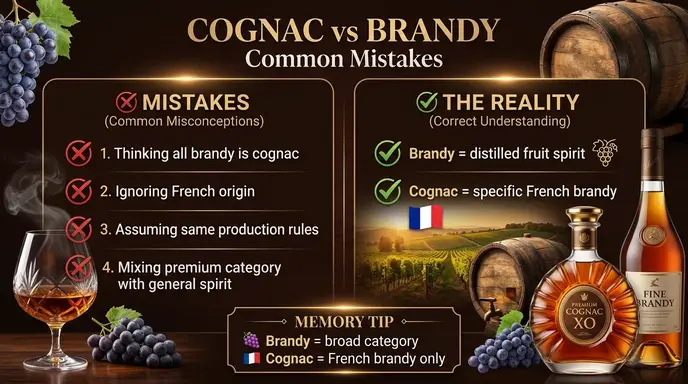
Thinking Cognac and Brandy Are Completely Different Drinks
❌ Cognac and brandy are unrelated spirits.
✅ Cognac is a specific type of brandy.
Assuming All Brandy Is Cognac
❌ Every grape brandy can be called cognac.
✅ Only brandy from the Cognac region of France qualifies as cognac.
Ignoring Regional Rules
❌ Location does not matter in cognac production.
✅ Cognac must follow strict regional regulations.
Confusing Quality Levels
❌ All brandy has the same quality as cognac.
✅ Brandy quality varies widely depending on production methods.
Using Terms Incorrectly
❌ This Spanish spirit is French cognac.
✅ Spirit made outside Cognac is generally called brandy.
🧑💼 Real Life Examples with Cognac and Brandy
- Cognac often served during luxury dinners and celebrations
- Brandy commonly used in desserts and cooking recipes
- Bartenders use brandy in classic cocktails
- Collectors purchase aged cognac bottles
- Restaurants pair cognac with chocolate and cigars
- Holiday drinks sometimes include fruit brandy varieties
🎯 When to Choose Cognac or Brandy
- Premium sipping experience → cognac
- Budget-friendly spirit option → brandy
- Luxury gifting → cognac
- Cooking and desserts → brandy
- Cocktail mixing → both
- Traditional French tasting experience → cognac
🤔 Why People Get Confused in Cognac and Brandy
- Both are grape-based spirits
- Their appearance looks similar
- Cognac is technically a type of brandy
- Restaurants often place them in the same category
- Many casual drinkers use the names interchangeably
🧠 How Beverage Systems Understand Cognac and Brandy
The beverage industry classifies:
- Brandy as the main spirit category
- Cognac as a protected regional subtype
This distinction helps maintain quality standards, product identity, and international trade regulations for alcoholic beverages.
🧠 Expert Insight
The difference between cognac and brandy mainly comes from origin, regulations, and production quality. Cognac follows strict French standards that create a refined and premium drinking experience, while brandy offers broader styles and price ranges across different countries.
In practical tasting experiences, many beginners notice cognac often feels smoother and more layered because of its controlled aging and traditional production methods.
❓ FAQ:
1. Is cognac the same as brandy?
No, cognac is a specific type of brandy.
2. Can brandy made outside France?
Yes, brandy produced worldwide.
3. Why is cognac more expensive?
Because of strict production rules, aging standards, and premium reputation.
4. Is cognac always made from grapes?
Yes, traditional cognac uses approved grape varieties.
5. Can brandy made from fruits other than grapes?
Yes, some brandies use apples, pears, and other fruits.
6. Which is smoother, cognac or brandy?
Cognac often considered smoother because of specialized aging and production methods.
7. Are cognac and brandy both used in cocktails?
Yes, both commonly used in mixed drinks and classic cocktails.
🧾 Conclusion
The difference between cognac and brandy comes from regional origin, production standards, aging methods, and overall classification.
Understanding the difference between cognac and brandy helps people choose the right spirit for tasting, gifting, collecting, and cocktails. Once you understand that all cognac is brandy but not all brandy is cognac, the distinction becomes much easier to remember in beverage culture and fine dining discussions.
Discover More Articles:

Hi, I’m Nabeel Hassan. I love exploring interesting topics and explaining how different things compare with each other. Through my writing, I aim to provide clear, helpful, and easy to read explanations. I cover subjects related to learning, science, technology and general knowledge.