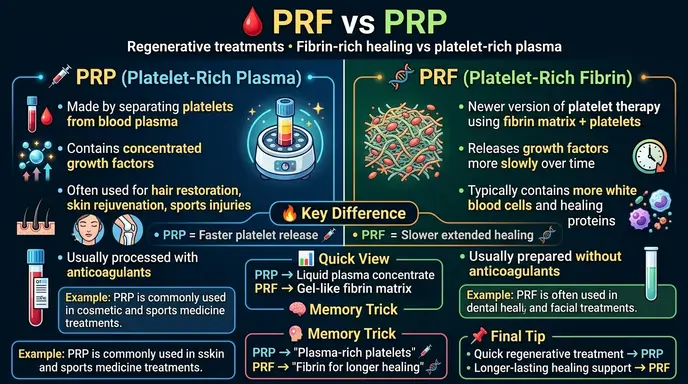
The difference between PRF and PRP is that PRP (Platelet Rich Plasma) is a blood derived treatment processed quickly with anticoagulants to release concentrated platelets, while PRF (Platelet Rich Fibrin) is a slower processed treatment without anticoagulants that forms a fibrin matrix for gradual healing support.
Many people search for the difference between PRF and PRP because both are used in regenerative medicine, hair restoration, dentistry, skin treatments, and healing procedures, yet they work differently in preparation, release speed, and treatment goals.
In simple words, PRP delivers platelets quickly, while PRF releases healing factors more gradually over time. Understanding the difference between PRF and PRP helps patients better understand modern regenerative therapies and treatment options.
💡 Quick Answer: Difference Between PRF or PRP
PRP provides concentrated platelets with faster release, while PRF forms a fibrin rich matrix that releases healing components more slowly and naturally.
👉 Example:
A hair restoration clinic may use PRP for faster platelet concentration, while PRF may be chosen for longer lasting growth factor release.
📘 Definition of PRF and PRP
- PRF (Platelet Rich Fibrin): A regenerative treatment made from blood that forms a fibrin matrix containing platelets and healing factors without anticoagulants.
- PRP (Platelet Rich Plasma): A regenerative treatment made from blood plasma containing concentrated platelets prepared using anticoagulants.
🗣️ Pronunciation (US & UK)
- PRF
- US: /ˌpiː.ɑːrˈef/
- UK: /ˌpiː.ɑːrˈef/
- PRP
- US: /ˌpiː.ɑːrˈpiː/
- UK: /ˌpiː.ɑːrˈpiː/
These treatments are commonly discussed in cosmetic procedures, regenerative medicine, dentistry, orthopedics, and hair restoration clinics.
📊 Comparison Table: PRF vs PRP
| Feature | PRF | PRP | Similarity |
| Main Material | Platelet rich fibrin matrix | Platelet rich plasma | Both use the patient’s blood |
| Anticoagulants | Usually not used | Commonly used | Both support healing processes |
| Release Speed | Slower gradual release | Faster release of growth factors | Both contain platelets |
| Processing Method | Slower centrifuge process | Faster centrifuge process | Both involve blood spinning |
| Texture | Gel like fibrin structure | Liquid plasma form | Both used in regenerative medicine |
| Treatment Duration | Longer release support | Shorter concentrated release | Both used in cosmetic and medical fields |
| Common Uses | Dentistry, under eye treatments, healing | Hair restoration, joint treatments, skin procedures | Both promote tissue support |
| Natural Clotting | Forms natural fibrin scaffold | Less fibrin structure | Both support regenerative therapy |
This table clearly shows the difference and similarity between PRF and PRP for quick understanding.
🧠 Key Differences Explained Between PRP and PRF
🩸 Processing Technique
The biggest difference between PRF and PRP is how blood is processed. PRP uses anticoagulants and faster spinning, while PRF avoids anticoagulants and spins more slowly.
👉 Example:
PRF creates a fibrin matrix that can slowly release growth factors over time.
⏳ Release of Growth Factors
PRP delivers concentrated platelets quickly, while PRF provides a slower release.
🧬 Fibrin Structure
PRF contains a stronger fibrin network that helps support tissue healing.
👉 Example:
Some dental procedures prefer PRF because of its fibrin scaffold properties.
💉 Texture and Application
PRP is usually more liquid, while PRF has a thicker gel like consistency.
🦷 Treatment Areas
PRF is commonly used in dentistry and facial treatments, while PRP is widely used in hair restoration and sports medicine.
🌱 Healing Support
PRF may support longer regenerative activity due to gradual release patterns.
⚡ Preparation Speed
PRP processing is often faster than PRF preparation.
🧠 Why PRF and PRP Get Confused
The difference between PRF and PRP becomes confusing because both treatments:
- Use the patient’s own blood
- Support healing and regeneration
- Involve centrifuge processing
- Are used in cosmetic and medical procedures
- Aim to improve tissue repair
🌐 How Medical and Cosmetic Systems Use PRF and PRP
Modern regenerative systems classify:
- PRP as concentrated platelet plasma therapy
- PRF as fibrin rich regenerative therapy
Clinics and medical organizations like American Academy of Dermatology and cosmetic practices often discuss these treatments in:
- Hair restoration
- Facial rejuvenation
- Dental surgery
- Sports injury support
- Skin procedures
Platforms like YouTube and Instagram also feature educational discussions comparing PRF and PRP procedures.
📊 Difference + Similarity Table
| Feature | PRF | PRP | Similarity |
| Meaning | Platelet rich fibrin treatment | Platelet rich plasma treatment | Both are regenerative therapies |
| Blood Processing | Slower spin without anticoagulants | Faster spin with anticoagulants | Both use centrifuges |
| Texture Type | Gel like fibrin matrix | Liquid plasma concentration | Both contain healing components |
| Growth Factor Release | Gradual release | Faster release | Both support tissue healing |
| Fibrin Presence | High fibrin structure | Lower fibrin structure | Both use platelets |
| Treatment Focus | Longer healing support | Concentrated platelet delivery | Both used medically and cosmetically |
| Common Procedures | Dental and facial applications | Hair and joint treatments | Both support regenerative medicine |
| Healing Mechanism | Scaffold based support | Platelet concentration support | Both encourage recovery processes |
This table clearly shows the difference and similarity between PRF and PRP for quick understanding.
🧬 Deep Explanation: Why PRF Is Considered More “Natural” by Some Clinics
Some practitioners describe PRF as more natural because:
- It avoids anticoagulants
- Blood clotting occurs more naturally
- Growth factors may release gradually over time
👉 Example:
A dental specialist may place PRF into extraction areas to support tissue healing through fibrin structure formation.
PRP, however, remains highly popular because:
- It is widely studied
- Preparation is relatively quick
- Platelet concentration can be very high
Both treatments continue evolving in regenerative medicine and cosmetic care.
⚠️ Common Mistakes with Difference Between PRF and PRP
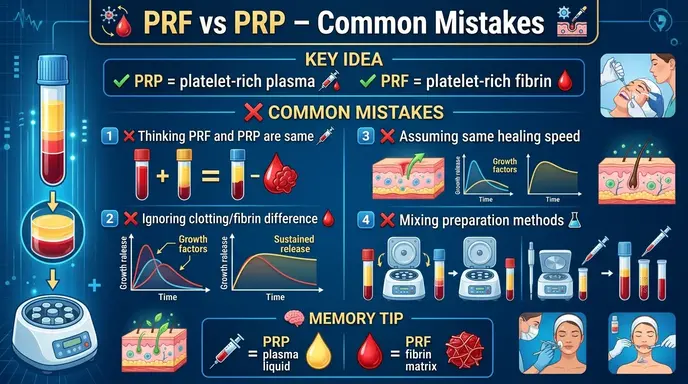
Thinking PRF and PRP Are Exactly the Same
❌ PRF and PRP are identical treatments.
✅ Their preparation methods and healing behavior differ.
Ignoring Anticoagulant Differences
❌ PRF always uses anticoagulants like PRP.
✅ PRF commonly avoids anticoagulants.
Assuming One Treatment Is Universally Better
❌ PRF always works better than PRP in every situation.
✅ Treatment choice depends on goals and medical context.
Using Terms Incorrectly
❌ PRP forms the same fibrin matrix as PRF.
✅ PRF contains a stronger fibrin structure.
Believing Results Are Instant
❌ PRF and PRP produce immediate permanent results.
✅ Healing and regeneration usually take time.
Confusing Cosmetic and Medical Applications
❌ PRF and PRP are only cosmetic procedures.
✅ They are also used in dentistry, orthopedics, and regenerative medicine.
🧑⚕️ Real Life Examples with PRF and PRP
- Hair restoration clinics using PRP injections
- Dentists applying PRF after tooth extraction
- Sports injury support therapies using PRP
- Facial rejuvenation treatments using PRF
- Skin rejuvenation procedures using platelet therapies
- Regenerative medicine clinics comparing both methods
🎯 When to Use PRF or PRP
- Faster platelet concentration → PRP
- Gradual healing support → PRF
- Hair restoration treatments → PRP commonly used
- Dental tissue support → PRF commonly preferred
- Sports medicine applications → PRP often selected
- Fibrin scaffold support → PRF
🤔 Why People Get Confused in PRF and PRP
- Similar names and abbreviations
- Both use blood derived components
- Both involve regenerative medicine
- Cosmetic clinics market both heavily
- Procedures may appear visually similar
🧠 How Regenerative Medicine Systems Understand PRF and PRP
Medical systems analyze:
- Platelet concentration
- Fibrin structure
- Healing release patterns
- Treatment goals
- Tissue support mechanisms
This helps clinics choose appropriate regenerative approaches for different procedures.
🧠 Expert Insight
The difference between PRF and PRP mainly comes from preparation method, fibrin structure, and release behavior. PRP focuses on concentrated platelet delivery, while PRF emphasizes gradual healing support through a fibrin rich matrix.
In practical regenerative medicine, treatment selection depends on procedure goals, tissue type, healing strategy, and practitioner preference rather than one universally replacing the other.
❓ FAQ: Difference Between PRP or PRF
1. What is the main difference between PRF and PRP?
PRF uses a fibrin matrix with gradual release, while PRP focuses on concentrated platelet plasma.
2. Does PRF use anticoagulants?
PRF commonly avoids anticoagulants.
3. Which treatment is used for hair restoration?
PRP is commonly used for hair restoration procedures.
4. Why is PRF popular in dentistry?
Its fibrin matrix may help support tissue healing.
5. Are both treatments made from blood?
Yes, both use the patient’s own blood.
6. Is PRF thicker than PRP?
Yes, PRF usually has a thicker gel like texture.
7. Can PRF and PRP both support healing?
Yes, both are regenerative therapies used to support tissue repair.
🧾 Conclusion
The difference between PRF and PRP comes from blood processing, fibrin structure, release speed, and regenerative behavior. PRP delivers concentrated platelets quickly through plasma based therapy, while PRF creates a fibrin rich matrix that may support slower and more gradual healing activity.
Understanding the difference between PRF and PRP helps patients better understand regenerative medicine, cosmetic procedures, and healing focused therapies. Once you connect PRP with concentrated platelet plasma and PRF with fibrin supported regeneration, the distinction becomes much easier to recognize in modern medical and cosmetic treatments.
Discover More Articles:

Hi, I’m Nabeel Hassan. I love exploring interesting topics and explaining how different things compare with each other. Through my writing, I aim to provide clear, helpful, and easy to read explanations. I cover subjects related to learning, science, technology and general knowledge.