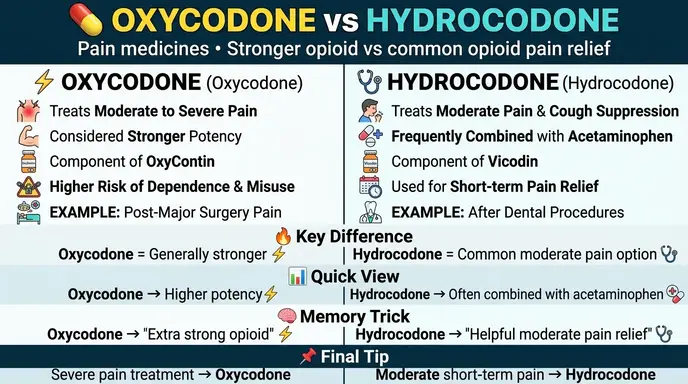
The difference between oxycodone and hydrocodone is that both are prescription opioid pain medicines, but oxycodone is generally considered stronger and is more commonly used for moderate to severe pain, while hydrocodone is often prescribed for moderate pain and may sometimes be combined with other medications like acetaminophen.
Many people search for the difference between oxycodone and hydrocodone because these medicines are used for pain relief, yet they differ in strength, usage, formulations, side effects, and prescribing practices.
In simple words, both medicines help manage pain, but oxycodone usually has a stronger effect, while hydrocodone is often used for less severe pain situations. Understanding the difference between oxycodone and hydrocodone helps patients better understand prescriptions, pain management discussions, and medication safety.
💡 Quick Answer: Difference Between Oxycodone or Hydrocodone
Oxycodone is generally stronger and often used for more severe pain, while hydrocodone is commonly prescribed for moderate pain relief.
👉 Example:
Patient recovering from major surgery may receive oxycodone, while someone with moderate dental pain may be prescribed hydrocodone.
📘 Definition of Oxycodone and Hydrocodone
- Oxycodone: A prescription opioid medicine used to treat moderate to severe pain.
- Hydrocodone: A prescription opioid medicine commonly used for moderate pain and cough suppression in some formulations.
🗣️ Pronunciation (US & UK)
- Oxycodone
- US: /ˌɑːk.siˈkoʊ.doʊn/
- UK: /ˌɒk.sɪˈkəʊ.dəʊn/
- Hydrocodone
- US: /ˌhaɪ.droʊˈkoʊ.doʊn/
- UK: /ˌhaɪ.drəʊˈkəʊ.dəʊn/
These medicines commonly discussed in healthcare, pain management, surgery recovery, pharmacy services, and prescription medicine discussions.
📊 Comparison Table: Oxycodone vs Hydrocodone
| Feature | Oxycodone | Hydrocodone | Similarity |
| Main Use | Moderate to severe pain | Moderate pain relief | Both are opioid pain medicines |
| Strength | Generally stronger | Usually slightly milder | Both require prescriptions |
| Common Combination | Sometimes combined with acetaminophen | Frequently combined with acetaminophen | Both may appear in combination medicines |
| Pain Relief Speed | Fast acting in many forms | Fast acting in many forms | Both affect opioid receptors |
| Addiction Risk | High | High | Both carry dependency risk |
| Medical Monitoring | Requires careful supervision | Requires careful supervision | Both can cause serious side effects |
| Drowsiness Effect | Common | Common | Both may impair alertness |
| Prescription Control | Highly regulated | Highly regulated | Both are controlled substances |
This table clearly shows the difference and similarity between oxycodone and hydrocodone for quick understanding.
🧠 Key Differences Explained Between Hydrocodone and Oxycodone
💊 Strength and Potency
The biggest difference between oxycodone and hydrocodone is strength. Oxycodone generally considered more potent for pain relief.
👉 Example:
Patients recovering from major injuries or surgeries may sometimes receive oxycodone for stronger pain management.
🩺 Common Medical Use
Hydrocodone frequently prescribed for moderate pain situations.
⚠️ Addiction and Dependency Risk
Both medicines carry significant risks of misuse, dependence, and addiction.
👉 Example:
Doctors carefully monitor opioid prescriptions to reduce overdose and misuse risks.
💡 Medication Combinations
Hydrocodone often combined with acetaminophen in prescription products.
⏳ Duration and Formulations
Both medicines are available in immediate-release and extended-release forms.
😴 Side Effects
Common side effects include:
- Drowsiness
- Nausea
- Constipation
- Dizziness
🏥 Prescription Regulations
Governments and healthcare systems regulate both medicines strictly because of opioid safety concerns.
🧠 Why Oxycodone and Hydrocodone Get Confused
The difference between oxycodone and hydrocodone becomes confusing because both medicines belong to the opioid drug category and are used for pain relief. Their names also sound somewhat similar, and both may appear in combination medications.
🌐 How Healthcare Systems Use Oxycodone and Hydrocodone
Healthcare systems classify:
- Oxycodone as a stronger opioid pain medicine
- Hydrocodone as a commonly prescribed opioid for moderate pain
Organizations like U.S. Food and Drug Administration and Centers for Disease Control and Prevention monitor opioid safety, prescription practices, and misuse prevention.
Hospitals and pharmacies carefully track:
- Dosage levels
- Prescription history
- Drug interactions
- Patient safety risks
📊 Difference + Similarity Table
| Feature | Oxycodone | Hydrocodone | Similarity |
| Meaning | Strong opioid pain medicine | Opioid pain medicine for moderate pain | Both treat pain |
| Pain Level Use | Moderate to severe pain | Moderate pain | Both prescribed by doctors |
| Potency | Usually stronger | Usually milder | Both affect pain receptors |
| Combination Medicines | Sometimes combined with other drugs | Commonly combined with acetaminophen | Both available in multiple forms |
| Addiction Risk | High dependency potential | High dependency potential | Both require caution |
| Side Effects | Drowsiness and nausea common | Drowsiness and nausea common | Both may impair alertness |
| Regulation | Strict prescription control | Strict prescription control | Both are controlled medicines |
| Medical Monitoring | Careful supervision required | Careful supervision required | Both need professional guidance |
This table clearly shows the difference and similarity between oxycodone and hydrocodone for quick understanding.
🩺 Deep Explanation: Why Opioid Safety Matters
Both medicines work by affecting opioid receptors in the brain and nervous system:
- Pain signals become reduced
- The body feels less discomfort
- Relaxation or drowsiness may occur
👉 Example:
After surgery, doctors may prescribe opioid medicines for short-term pain management while monitoring dosage carefully.
However, opioid medicines also carry serious risks:
- Dependence
- Misuse
- Breathing problems
- Overdose danger
This is why healthcare providers usually prescribe them carefully and for limited periods when possible.
⚠️ Common Mistakes with Difference Between Oxycodone and Hydrocodone
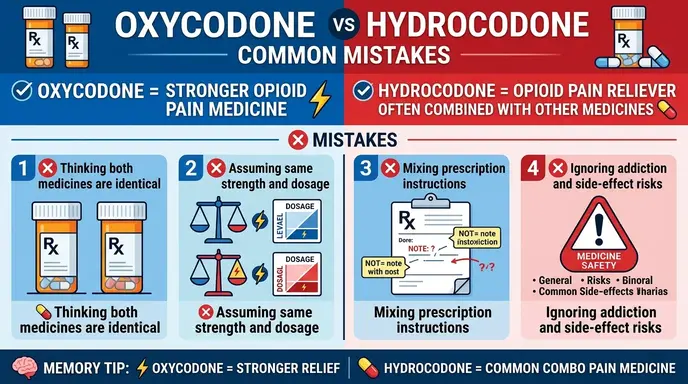
Thinking Both Medicines Are Completely Identical
❌ Oxycodone and hydrocodone work exactly the same way in all situations.
✅ They differ in strength, formulation, and prescribing use.
Ignoring Addiction Risks
❌ Prescription opioids are always completely safe.
✅ Both medicines carry serious dependency risks.
Using Terms Incorrectly
❌ Hydrocodone is not an opioid medicine.
✅ Hydrocodone belongs to the opioid category.
Assuming Stronger Means Better
❌ Stronger pain medicine is always the best option.
✅ Doctors choose medicine based on patient needs and safety.
Sharing Prescription Medicines
❌ Opioid prescriptions are safe to share with others.
✅ Prescription medicines should only be used by the prescribed patient.
Ignoring Side Effects
❌ Opioids only affect pain levels.
✅ They may also cause drowsiness, constipation, and breathing issues.
🧑⚕️ Real Life Examples with Oxycodone and Hydrocodone
- Oxycodone prescribed after major surgery
- Hydrocodone used for dental pain relief
- Short-term opioid prescriptions after injuries
- Pain management during recovery periods
- Hospital monitoring of opioid medications
- Patients receiving combination pain medicines with acetaminophen
🎯 When Doctors May Use Each Medicine
- Severe post-surgical pain → oxycodone
- Moderate injury pain → hydrocodone
- Short-term pain management → either depending on severity
- Stronger pain relief needs → oxycodone
- Combination medication use → hydrocodone commonly used
- Carefully monitored opioid treatment → both medicines
🤔 Why People Get Confused in Oxycodone and Hydrocodone
- Both are opioid medicines
- Their names sound similar
- Both treat pain
- Both can appear in combination medications
- Side effects and warnings overlap significantly
🧠 How Healthcare Systems Understand Oxycodone and Hydrocodone
Medical systems analyze:
- Pain severity
- Patient history
- Addiction risk
- Drug interactions
- Prescription safety
Healthcare providers use controlled prescribing systems to reduce misuse and improve patient safety during opioid treatment.
🧠 Expert Insight
The difference between oxycodone and hydrocodone mainly involves strength, prescribing patterns, and pain management use. Oxycodone generally stronger and may be chosen for more severe pain, while hydrocodone is commonly prescribed for moderate pain situations.
In practical healthcare settings, both medicines require careful medical supervision because opioid misuse and dependency remain serious public health concerns.
❓ FAQ: Difference Between Hydrocodone or Oxycodone
1. What is the main difference between oxycodone and hydrocodone?
Oxycodone generally stronger, while hydrocodone is commonly used for moderate pain.
2. Are both medicines opioids?
Yes, both belong to the opioid pain medicine category.
3. Can both cause addiction?
Yes, both carry risks of dependence and misuse.
4. Which medicine is stronger?
Oxycodone generally considered more potent.
5. Do both require prescriptions?
Yes, both are controlled prescription medicines.
6. Are side effects similar?
Yes, both may cause drowsiness, nausea, and constipation.
7. Why these medicines carefully monitored?
Because opioids can lead to misuse, overdose, and dependency risks.
🧾 Conclusion
The difference between oxycodone and hydrocodone comes from strength, pain management use, formulations, and prescribing practices. Oxycodone generally stronger and often used for more severe pain, while hydrocodone is frequently prescribed for moderate pain and combination treatments.
Understanding the difference between oxycodone and hydrocodone helps patients better understand prescriptions, medication safety, and opioid pain management. Once you connect oxycodone with stronger pain relief and hydrocodone with moderate pain treatment, the distinction becomes much easier to understand in healthcare and medical discussions.
Discover More Articles:

Hi, I’m Nabeel Hassan. I love exploring interesting topics and explaining how different things compare with each other. Through my writing, I aim to provide clear, helpful, and easy to read explanations. I cover subjects related to learning, science, technology and general knowledge.