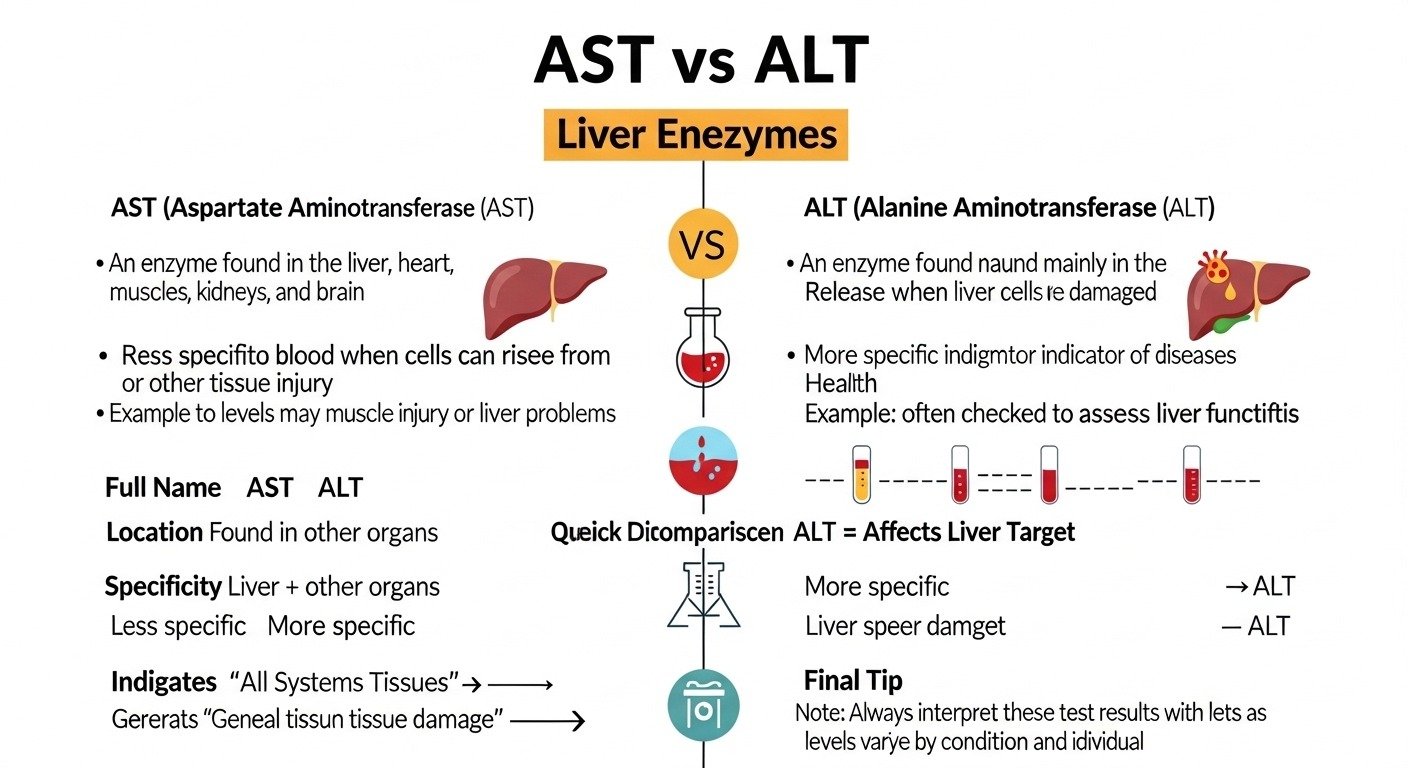
The difference between AST and ALT is mainly related to their location in the body and what they indicate about health.
Both are enzymes found in the liver and are commonly measured in blood tests to assess liver function.
Aspartate Aminotransferase (AST) is found in multiple organs like the liver, heart, and muscles, while Alanine Aminotransferase (ALT) is mostly found in the liver.
Understanding the difference between AST and ALT helps detect liver damage and other health conditions early.
🧪 Key Difference Between the Both
The main difference lies in specificity to the liver.
- AST: Found in many organs
- ALT: Mainly found in the liver
Examples:
- AST can rise due to muscle or heart issues.
- ALT usually rises due to liver problems.
🏥 Why Is Their Difference Important?
Understanding the difference between AST and ALT is important for diagnosing liver diseases, monitoring health, and interpreting blood test results. Doctors use these enzymes to identify conditions like Hepatitis and liver damage. Knowing the difference between AST and ALT helps in accurate diagnosis and treatment.
🔊 Pronunciation (US & UK)
| Enzyme | US Pronunciation | UK Pronunciation |
| AST | /ˌeɪ.esˈtiː/ | /ˌeɪ.esˈtiː/ |
| ALT | /ˌeɪ.elˈtiː/ | /ˌeɪ.elˈtiː/ |
➡️ Now let’s explore the detailed difference between AST and ALT step by step.
🌐 Difference Between AST and ALT
1️⃣ Full Form
AST stands for Aspartate Aminotransferase.
ALT stands for Alanine Aminotransferase.
Examples:
- AST abbreviation is common in reports.
- ALT appears in liver tests.
2️⃣ Location in Body
AST is found in liver, heart, muscles, kidneys, and brain.
ALT is mainly found in the liver.
Examples:
- AST is widespread.
- ALT is liver-specific.
3️⃣ Function
AST helps in amino acid metabolism in various tissues.
ALT helps mainly in liver metabolism.
Examples:
- AST works in multiple organs.
- ALT works mostly in liver cells.
4️⃣ Specificity
AST is less specific to liver damage.
ALT is more specific to liver damage.
Examples:
- AST may rise due to muscle injury.
- ALT mainly indicates liver issues.
5️⃣ Causes of Increase
AST increases due to liver, heart, or muscle damage.
ALT increases mainly due to liver damage.
Examples:
- AST rises after intense exercise.
- ALT rises in liver diseases.
6️⃣ Normal Levels
AST normal range is slightly lower or similar to ALT.
ALT normal range is slightly higher in some cases.
Examples:
- AST varies by lab.
- ALT also varies.
7️⃣ Diagnostic Use
AST helps in detecting multiple organ damage.
ALT helps in diagnosing liver conditions.
Examples:
- AST used with other tests.
- ALT used for liver health.
8️⃣ Ratio (AST/ALT)
AST/ALT ratio helps in diagnosis.
Examples:
- Higher AST than ALT → possible alcohol-related liver disease
- Higher ALT than AST → common liver injury
9️⃣ Release into Blood
AST is released when many tissues are damaged.
ALT is released mainly when liver cells are damaged.
Examples:
- AST rises in heart attack or injury.
- ALT rises in hepatitis.
🔟 Clinical Importance
AST provides broader health insight.
ALT gives focused liver information.
Examples:
- AST shows overall damage.
- ALT shows liver condition.
🧠 Nature and Behaviour of Both Ast and Alt
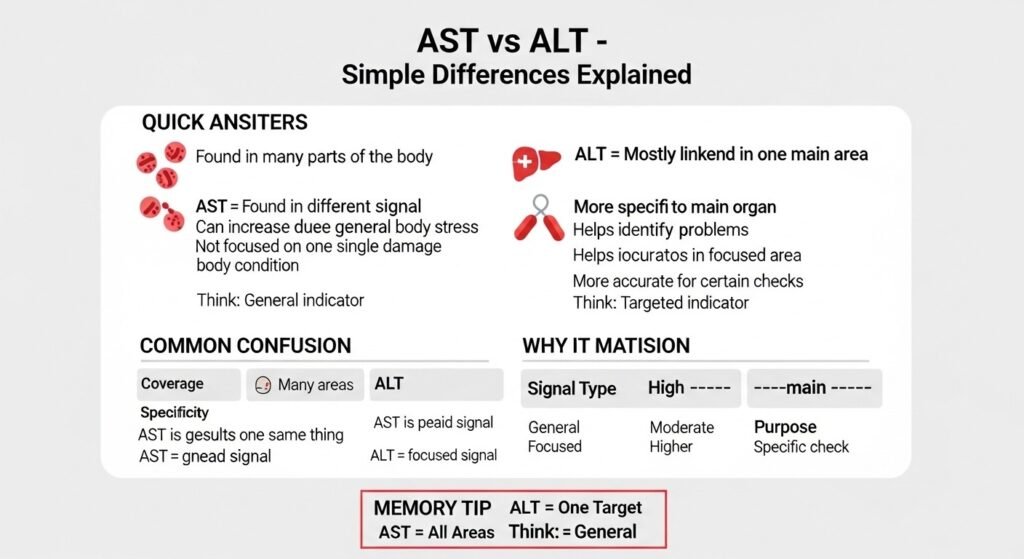
AST
- Found in many organs
- Less specific
- Indicates general tissue damage
ALT
- Mostly in liver
- Highly specific
- Indicates liver damage
📊 Comparison Chart
🧪 Difference Between AST and ALT
| Feature | AST 🧪 | ALT 🧪 |
| Full Form | Aspartate Aminotransferase | Alanine Aminotransferase |
| Location | Liver, heart, muscles, etc. | Mainly liver |
| Specificity | Low | High |
| Function | General metabolism | Liver metabolism |
| Increase Cause | Multiple organ damage | Liver damage |
| Diagnostic Use | Broad | Liver-specific |
| Release | Many tissues | Liver cells |
| Accuracy | Less specific | More accurate for liver |
| Ratio Use | Used with ALT | Used with AST |
| Importance | General health | Liver health |
⚖️ Which Is More Important?
Both are important, but:
- ALT is more important for liver-specific diagnosis
- AST is useful for understanding overall tissue damage
🎭 Use in Metaphors and Similes
Metaphor example:
- AST is like a general alarm system, while ALT is a specialized liver alarm.
Simile example:
- AST works like a broad scanner, while ALT works like a focused detector.
💬 Connotative Meaning
| Term | Connotation | Example |
| AST | General indicator | It acted like AST, showing overall issues. |
| ALT | Specific indicator | It worked like ALT, pointing to the liver. |
🗣️ Expressions
- Check AST and ALT levels
- Elevated liver enzymes
- Monitor liver function
📚 Medical Context
AST and ALT are commonly used in:
- Liver function tests (LFTs)
- Health checkups
- Disease diagnosis
❔ Frequently Asked Questions
1. What is the main difference between AST and ALT?
AST is found in many organs, while ALT is mainly in the liver.
2. Which is more specific to liver damage?
ALT is more specific.
3. Can AST be high without liver disease?
Yes, due to muscle or heart issues.
4. What does high ALT mean?
Possible liver damage.
5. Why are both tested together?
To get a complete picture of health.
🌍 Importance in Health
Understanding the difference between AST and ALT helps detect liver diseases early and maintain better health through proper diagnosis.
✍️ Final Words
The difference between AST and ALT is clear in their location and specificity. AST is a general enzyme found in many tissues, while ALT is a liver-specific enzyme. Both are essential for understanding body health.
🏁 Conclusion
Knowing the difference between AST and ALT helps in interpreting medical tests correctly. While AST provides a broader view of tissue damage, ALT gives a clearer picture of liver health. Together, they play a vital role in medical diagnosis.
Discover More Articles:

Hi, I’m Nabeel Hassan. I love exploring interesting topics and explaining how different things compare with each other. Through my writing, I aim to provide clear, helpful, and easy to read explanations. I cover subjects related to learning, science, technology and general knowledge.