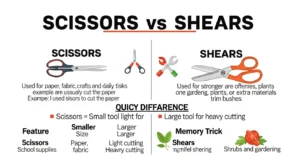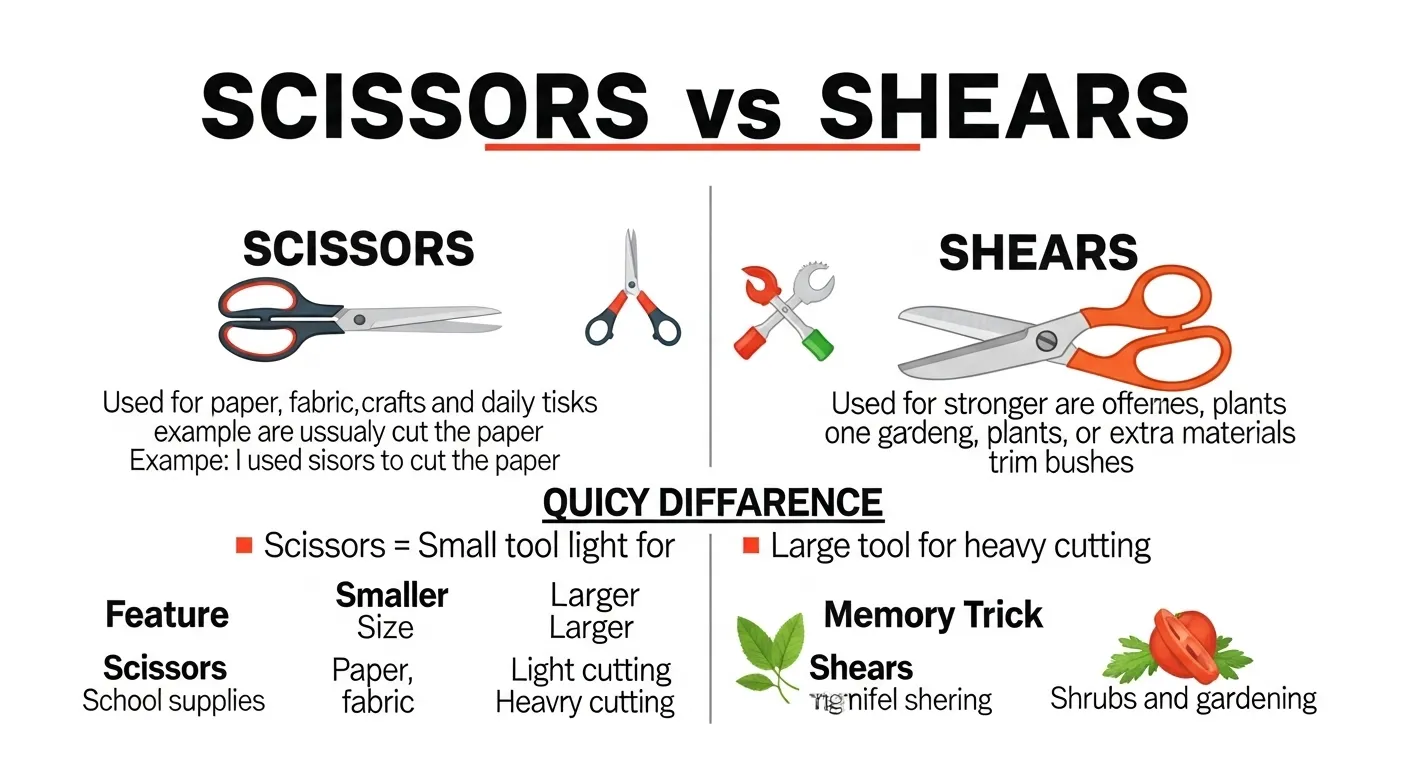
The difference between scissors and shears is that scissors are small cutting tools used for light tasks, while shears are larger and stronger tools designed for heavy cutting.
Imagine a student cutting paper for a school project using a small handheld tool. That tool is usually scissors because it is light and easy to control.
Now imagine a gardener trimming thick plant branches or fabric workers cutting heavy cloth. In such cases, they often use shears, which are larger and stronger.
Understanding the difference between scissors and shears helps people choose the right cutting tool for different tasks at home, school, or professional work environments.
🔑 Key Difference Between the Both
The main difference lies in size, strength, and purpose.
- Scissors: Small cutting tools for light materials.
- Shears: Larger cutting tools designed for thicker materials.
Examples:
- A student uses scissors to cut paper.
- Office workers often use scissors for simple tasks.
Examples:
- Gardeners use shears to trim plants.
- Tailors sometimes use shears to cut thick fabric.
🌍 Why Is Their Difference Necessary to Know?
Understanding the difference between scissors and shears is useful for many everyday activities. Students, artists, gardeners, and craftsmen all use cutting tools in different ways. When people know which tool is suitable for a specific task, they can work more efficiently and safely. Scissors are ideal for light materials such as paper, thin plastic, or thread. Shears are designed to handle stronger materials such as thick cloth, plants, or metal sheets. Knowing the difference between scissors and shears helps individuals select the right tool and achieve better results in practical tasks.
🔊 Pronunciation (US & UK)
| Word | US Pronunciation | UK Pronunciation |
| Scissors | /ˈsɪzərz/ | /ˈsɪzəz/ |
| Shears | /ʃɪərz/ | /ʃɪəz/ |
➡️ Let us explore the detailed difference between scissors and shears through simple explanations and examples.
✂️ Difference Between Scissors and Shears
1️⃣ Size
Scissors are usually smaller.
Shears are generally larger.
Examples:
- Small scissors fit easily in a pencil case.
- Children often use small scissors in school.
Examples:
- Gardening shears are large and strong.
- Tailoring shears are bigger than scissors.
2️⃣ Cutting Strength
Scissors cut light materials.
Shears cut thicker materials.
Examples:
- Scissors easily cut paper.
- Craft workers use scissors for light tasks.
Examples:
- Shears can cut thick fabric.
- Garden shears cut plant stems.
3️⃣ Blade Length
Scissors usually have shorter blades.
Shears have longer blades.
Examples:
- Office scissors have short blades.
- Craft scissors are compact.
Examples:
- Tailoring shears often have long blades.
- Garden shears have extended cutting edges.
4️⃣ Handle Design
Scissors usually have equal-sized handles.
Shears often have one larger handle.
Examples:
- Standard scissors have balanced handles.
- Small scissors are easy to hold.
Examples:
- Many shears have a larger handle for strength.
- Garden shears require a strong grip.
5️⃣ Common Use
Scissors are common in homes and schools.
Shears are common in professional work.
Examples:
- Office desks often include scissors.
- Students carry scissors in craft classes.
Examples:
- Gardeners use shears regularly.
- Tailors use fabric shears.
6️⃣ Weight
Scissors are lightweight.
Shears are heavier.
Examples:
- Small scissors are easy to carry.
- Craft scissors feel light in the hand.
Examples:
- Metal shears can feel heavy.
- Garden shears are designed for strength.
7️⃣ Material Types
Scissors cut paper, thread, and light materials.
Shears cut plants, thick cloth, or metal sheets.
Examples:
- Paper crafts require scissors.
- Ribbon cutting uses scissors.
Examples:
- Hedge trimming uses shears.
- Tailoring tasks use fabric shears.
8️⃣ Professional Applications
Scissors appear in everyday tasks.
Shears appear in specialized professions.
Examples:
- Teachers use scissors for classroom activities.
- Artists use scissors for design work.
Examples:
- Gardeners rely on pruning shears.
- Farmers may use agricultural shears.
9️⃣ Precision Level
Scissors are useful for detailed cutting.
Shears focus on strength rather than delicate work.
Examples:
- Craft workers use scissors for detailed designs.
- Small scissors cut precise shapes.
Examples:
- Garden shears trim large plant areas.
- Fabric shears cut long straight lines.
🔟 Appearance
Scissors appear compact and simple.
Shears appear larger and more robust.
Examples:
- Desk scissors are compact tools.
- Craft scissors come in many colors.
Examples:
- Garden shears look strong and durable.
- Tailor shears appear large and heavy.
🧠 Nature and Behaviour of Scissors and Shears
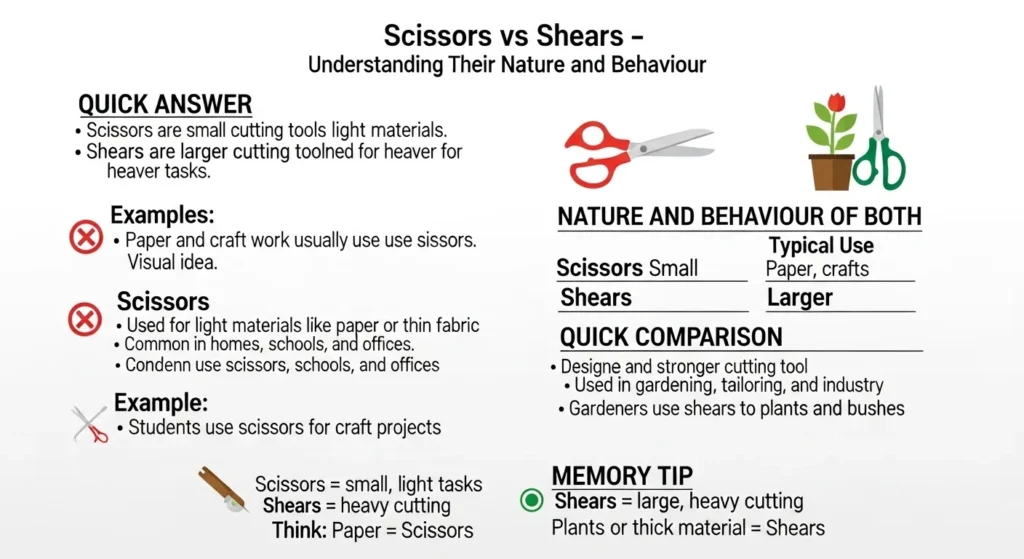
Scissors
- Small cutting tool
- Used for light materials
- Common in homes, schools, and offices
Shears
- Larger cutting tool
- Designed for heavy materials
- Used in gardening, tailoring, and industry
❓ Why People Are Confused About Their Use
People often confuse scissors and shears because both tools have two blades connected by a pivot and perform the same basic cutting action. In everyday language, many people call all cutting tools “scissors” without noticing differences in size or purpose. Since both tools look similar and share the same mechanical design, beginners may assume they are identical. The distinction becomes clearer when considering blade size, handle design, and the type of materials they are meant to cut.
📋 Table: Difference and Similarity
| Feature | Scissors | Shears |
| Size | Smaller | Larger |
| Strength | Light cutting | Heavy cutting |
| Blade Length | Shorter | Longer |
| Weight | Lighter | Heavier |
| Use | Paper and crafts | Plants and thick fabric |
⚖️ Which Is Better in What Situation?
Scissors
Scissors are better for everyday tasks that require precision and light cutting. Students, office workers, and craft enthusiasts often use them to cut paper, ribbon, or thin materials. Their smaller size and lightweight design allow for better control when performing detailed work.
Shears
Shears are better for tasks that require more strength and durability. Gardeners use them to trim plants and branches, while tailors use them to cut heavy fabric. Their longer blades and stronger handles make them suitable for cutting thicker materials efficiently.
🎭 Use in Metaphors and Similes
Metaphor example:
- His words worked like scissors, cutting through confusion.
Simile example:
- The decision came down like shears trimming unnecessary ideas.
💬 Connotative Meaning
| Word | Connotation | Example |
| Scissors | Precision and detail | The artist handled the design like careful scissors. |
| Shears | Strength and power | The manager cut unnecessary tasks like strong shears. |
🗣️ Idioms or Expressions
Run with scissors
Meaning: act in a risky or careless way.
Example:
- Making quick decisions without thinking can feel like running with scissors.
📚 Works in Literature Using the Word Scissors
- “The Tale of Despereaux” – Kate DiCamillo, 2003
- “Matilda” – Roald Dahl, 1988
🎬 Movies Featuring the Word Scissors
- “Edward Scissorhands” – 1990, USA
- “The Big Scissors” – 1969, USA
❔ Frequently Asked Questions
1. What is the main difference between scissors and shears?
Scissors are smaller cutting tools, while shears are larger tools designed for heavier cutting.
2. Can scissors cut fabric?
Yes, though heavy fabric often requires shears.
3. Why do tailors prefer shears?
Because shears provide strength and longer blades for cutting thick cloth.
4. Are gardening tools called shears?
Yes, many plant trimming tools are called shears.
5. Do both tools work the same way?
Yes, both use two blades joined by a pivot to cut materials.
🌱 How Both Are Useful for Surroundings
Scissors and shears are essential tools in daily life and professional work. They support many tasks such as crafting, sewing, gardening, and manufacturing. By allowing people to cut materials efficiently, these tools help create clothing, maintain gardens, and produce many useful items.
✍️ Final Words for Both
Scissors represent precision tools used for light cutting tasks.
Shears represent stronger cutting tools designed for heavier materials.
Both tools play important roles in everyday work and professional activities.
🏁 Conclusion
Understanding the difference between scissors and shears helps people choose the right tool for different cutting tasks. Scissors are smaller and lighter, making them ideal for delicate work such as cutting paper or thin materials. Shears are larger and stronger, allowing them to handle thick fabric, plants, and other heavy materials.
Although both tools share a similar design with two blades and a pivot joint, their size, strength, and applications set them apart. By recognizing these differences, individuals can work more efficiently and safely when selecting cutting tools.
Discover More Articles:

Hi, I’m Nabeel Hassan. I love exploring interesting topics and explaining how different things compare with each other. Through my writing, I aim to provide clear, helpful, and easy to read explanations. I cover subjects related to learning, science, technology and general knowledge.